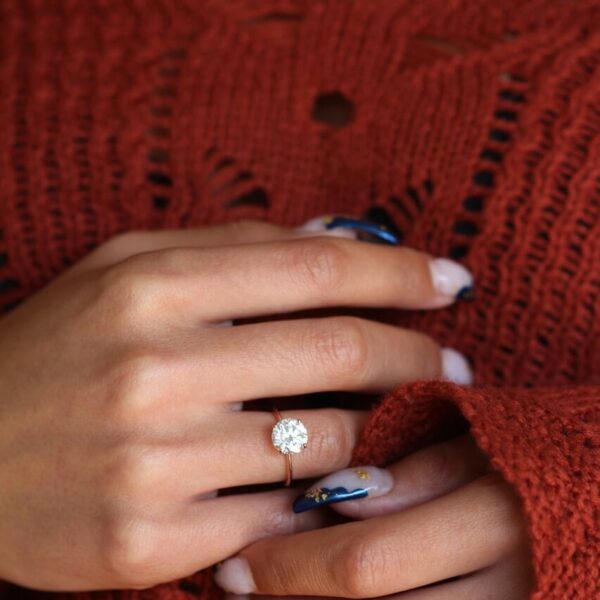
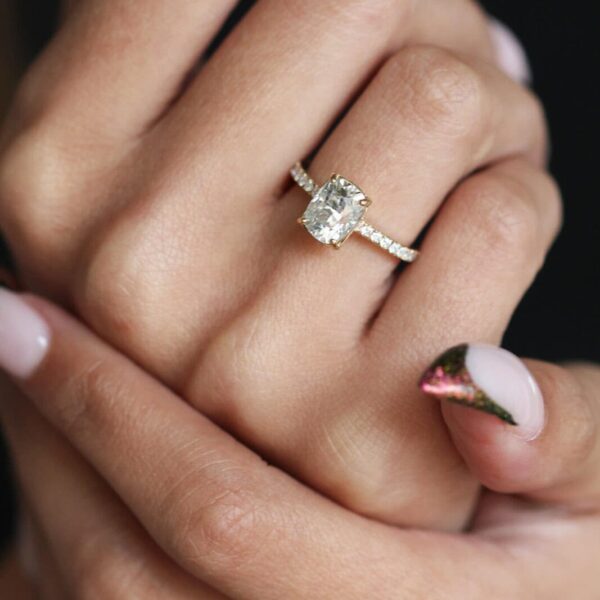
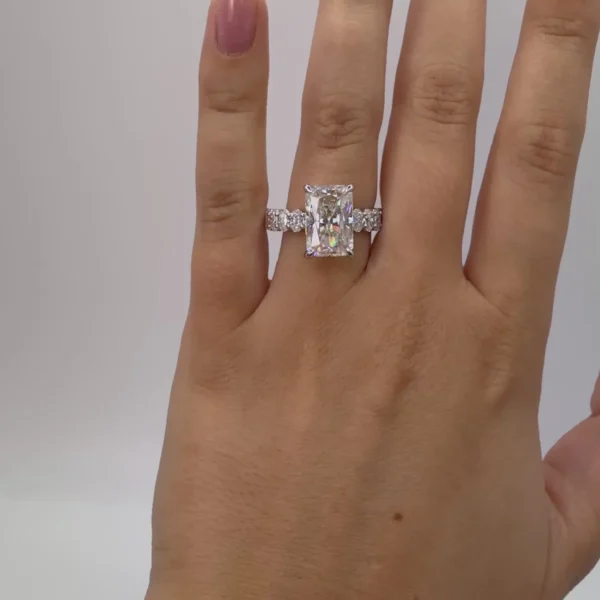
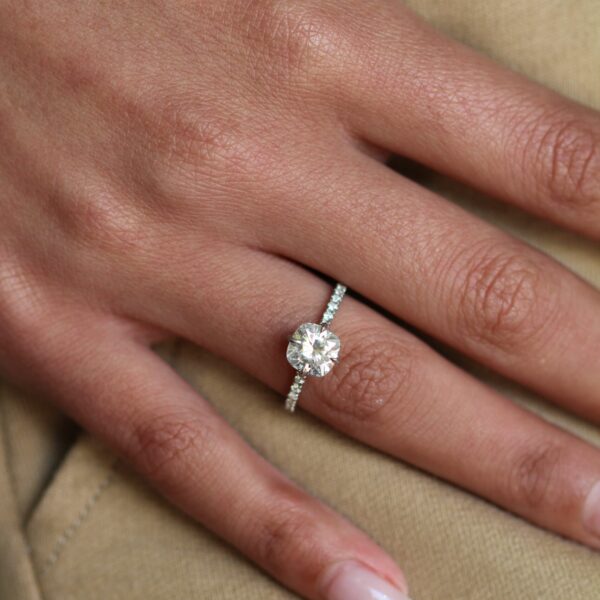
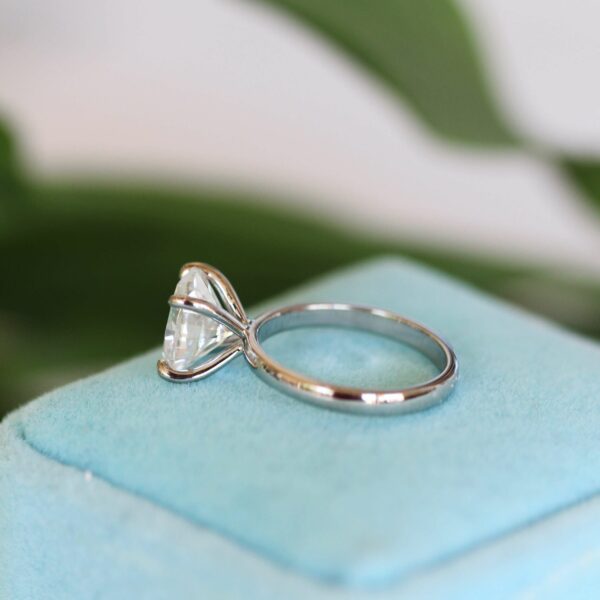
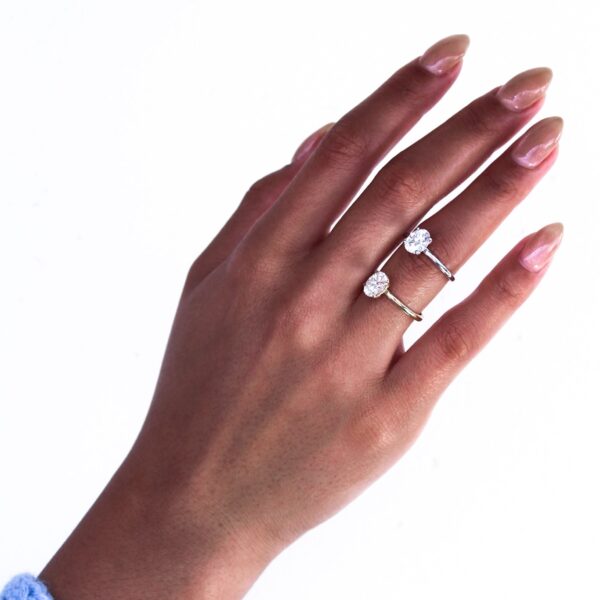
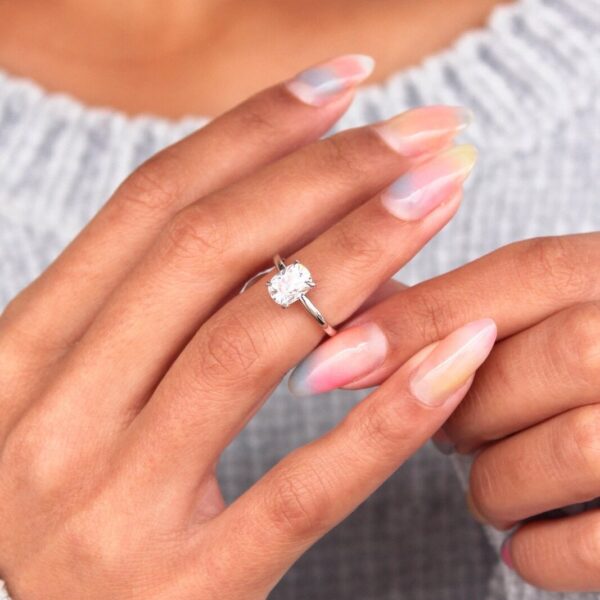
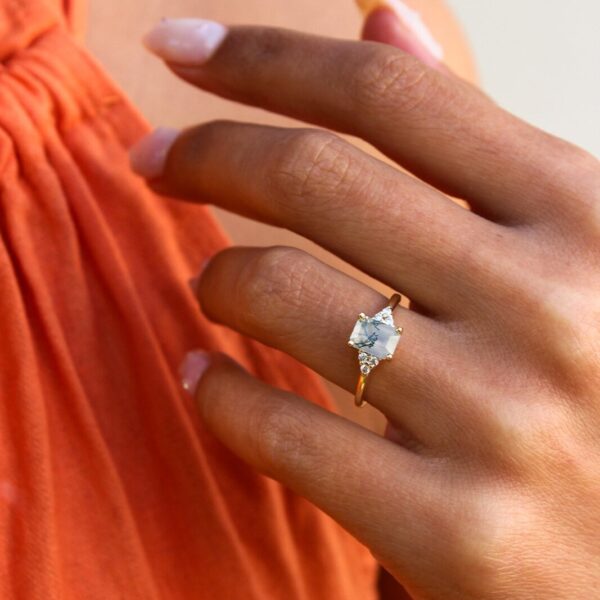
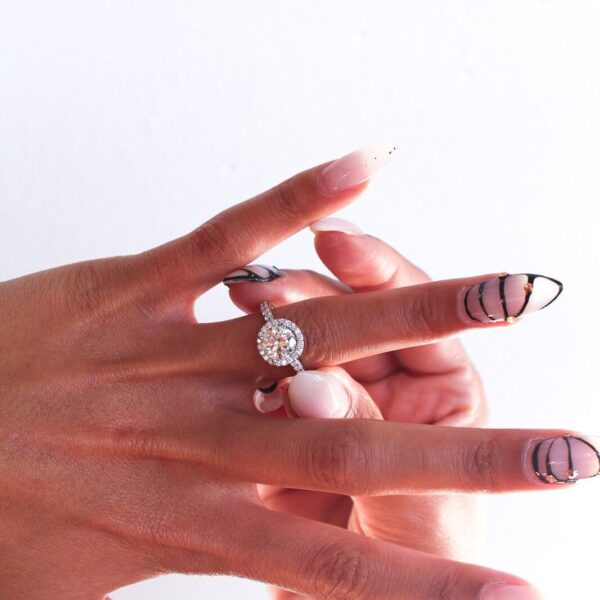
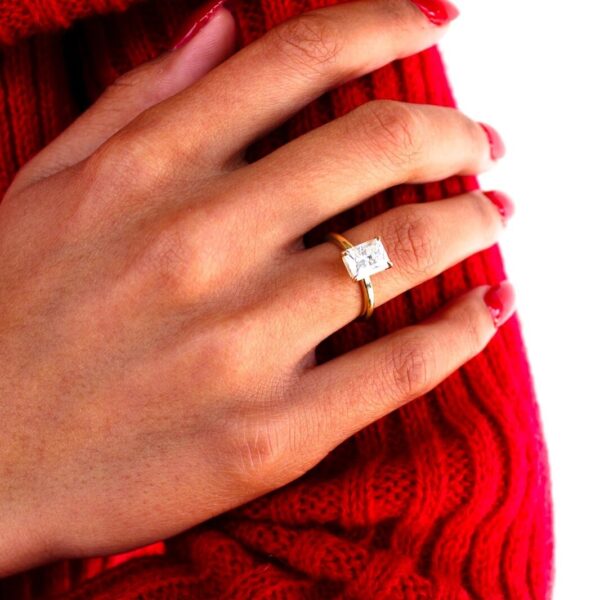
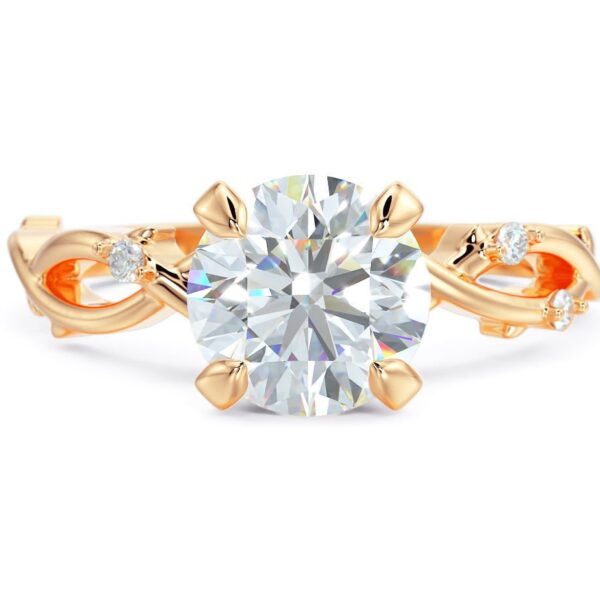
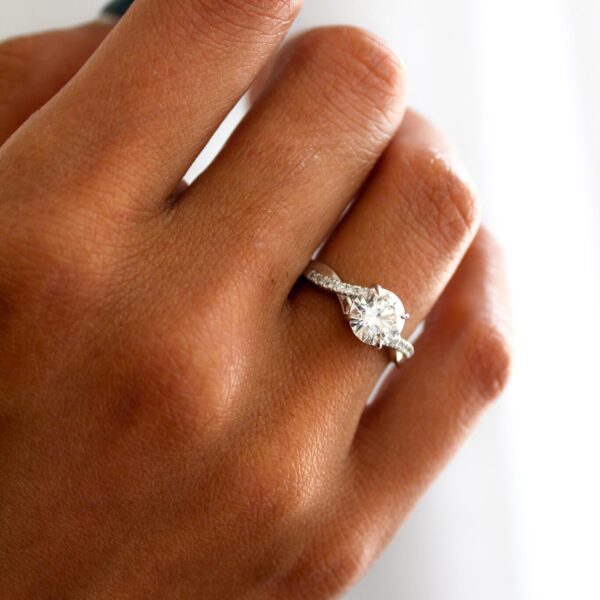
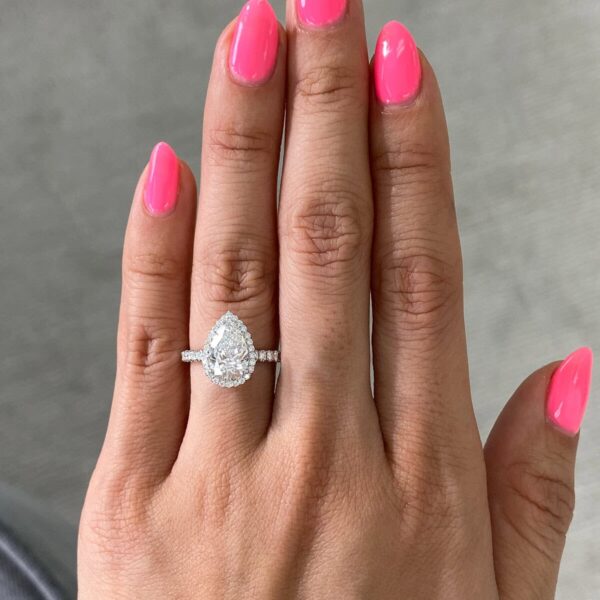
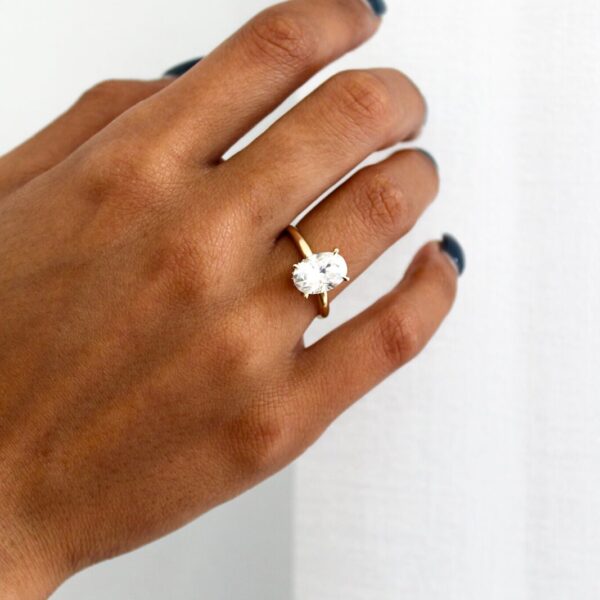
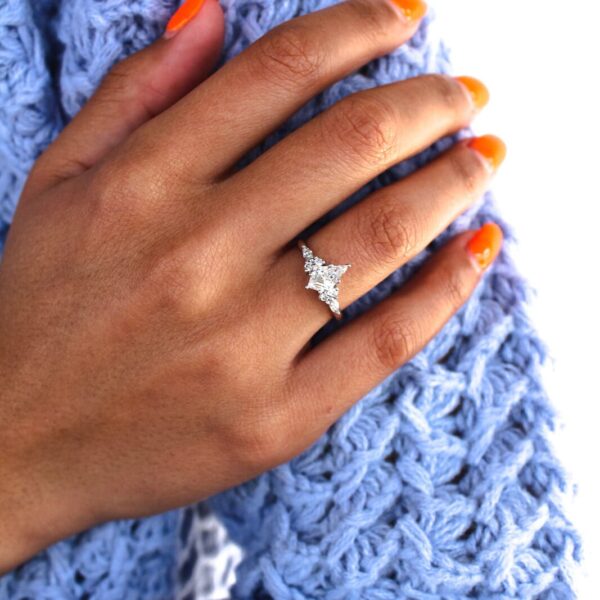
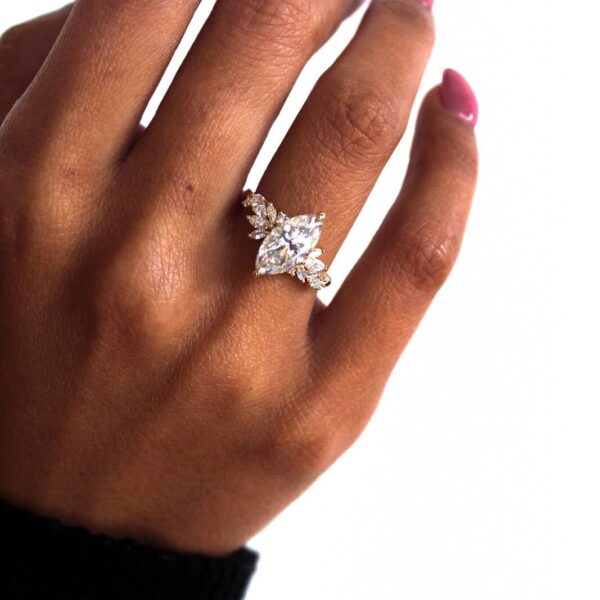
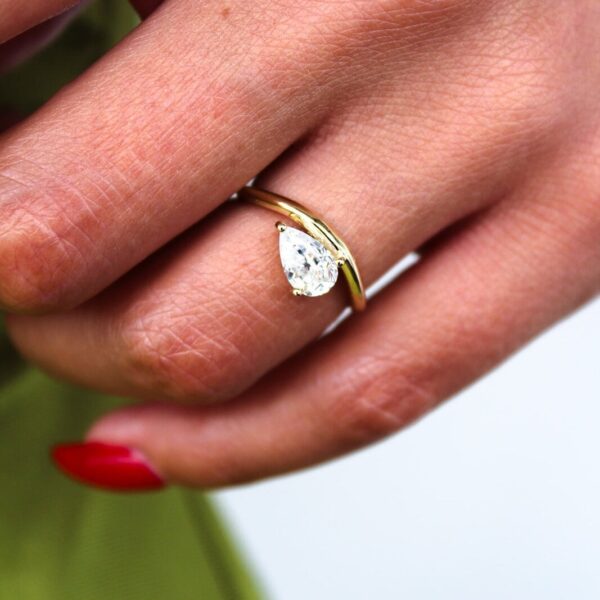
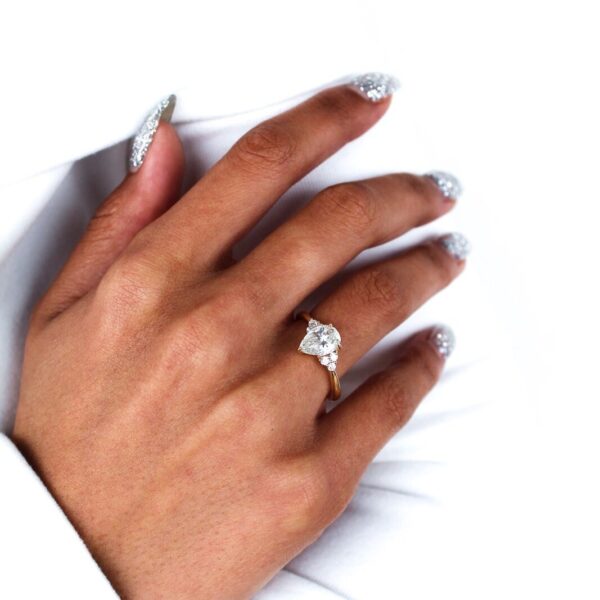
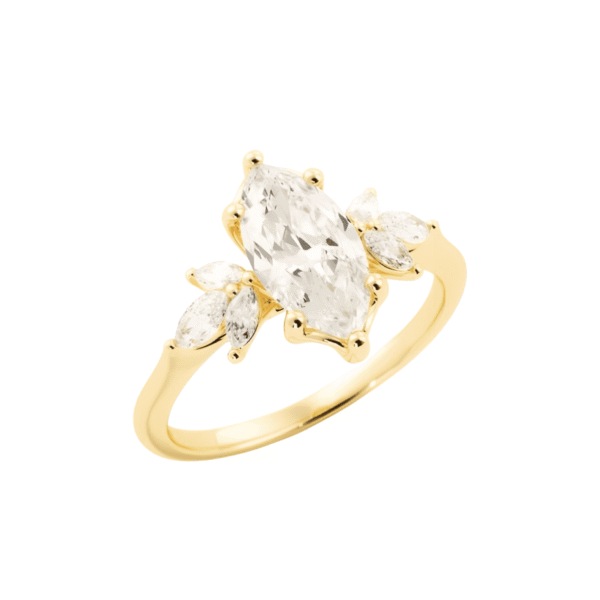
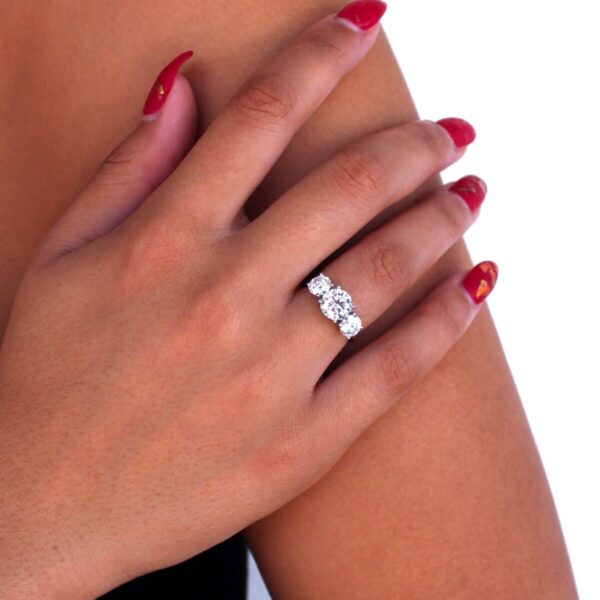
Moissanite Engagement Rings South Africa
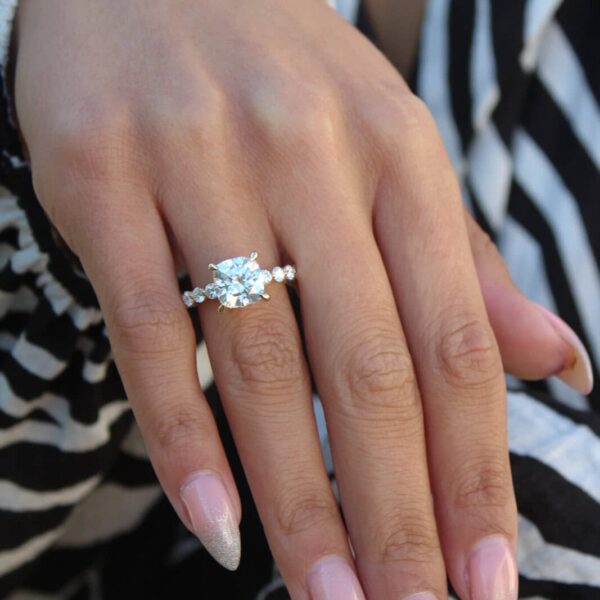
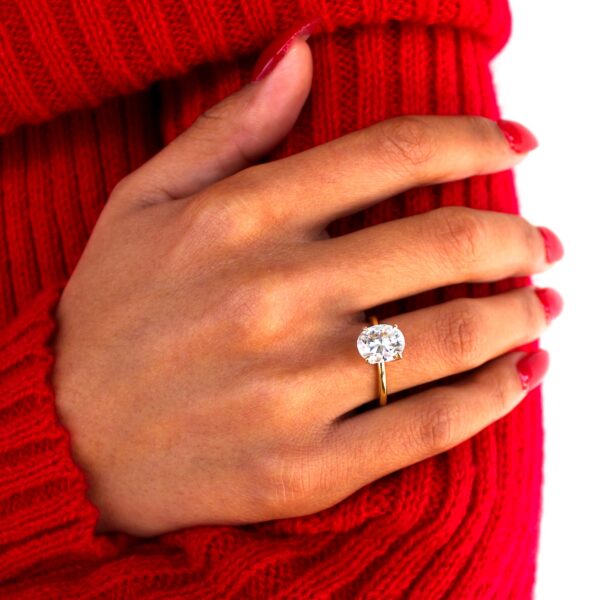
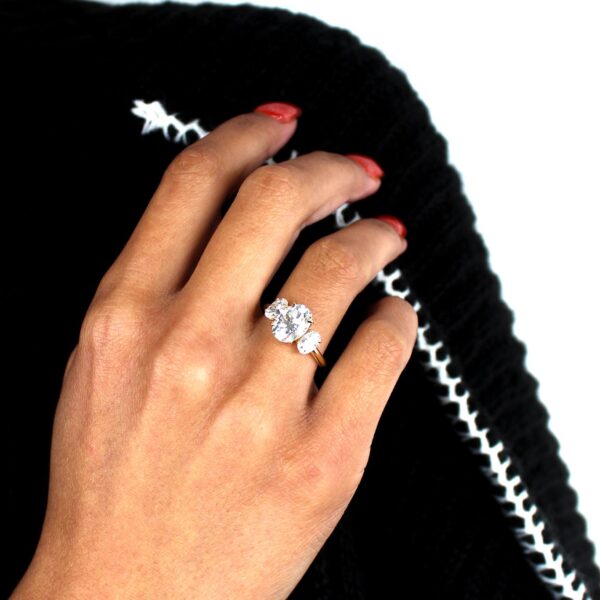
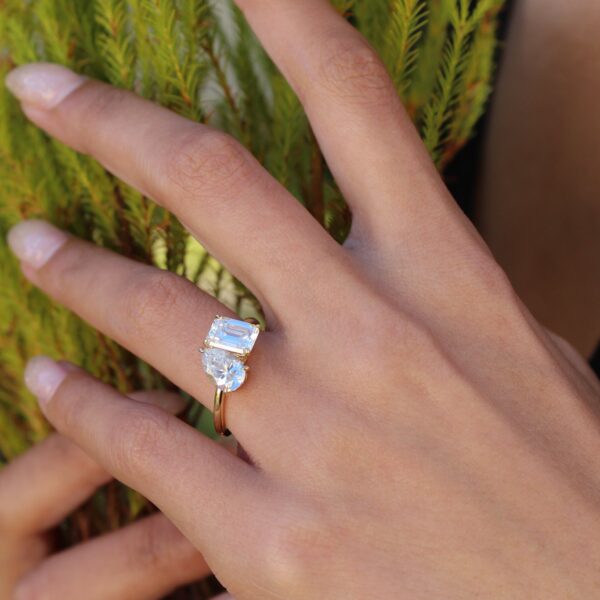
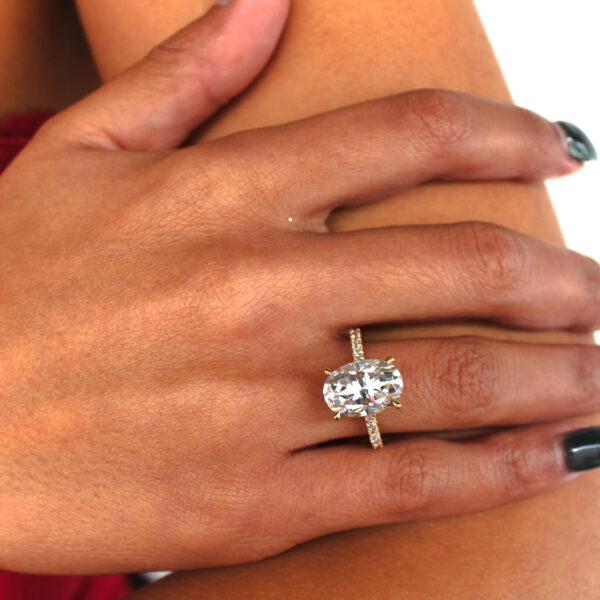
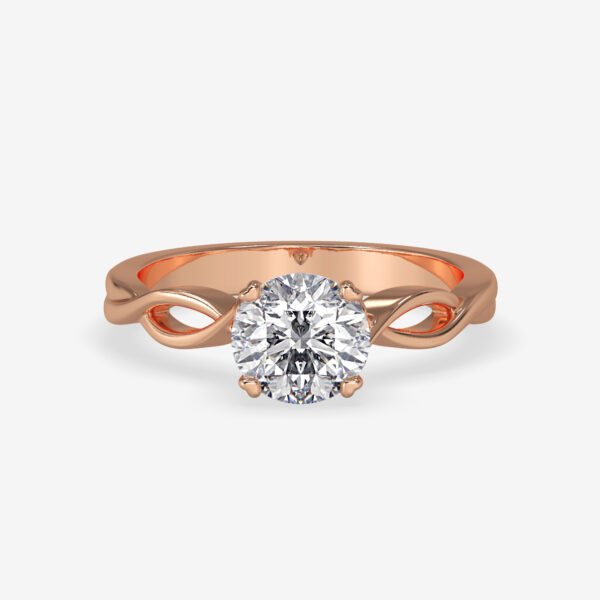
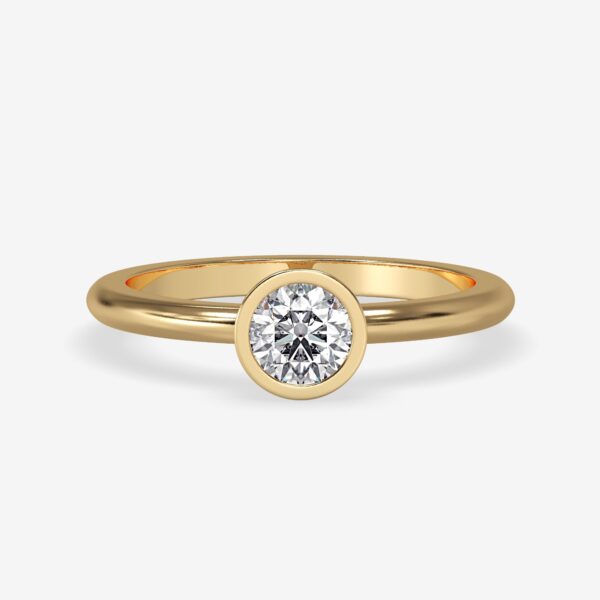
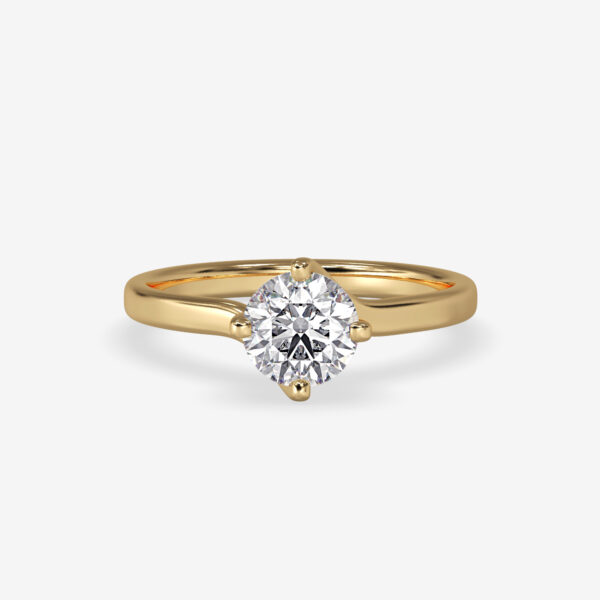
Over 100 designs, priced from R12,950 to R42,850, made to order in 9ct gold, 18ct gold, or platinum at Moissanite by Design. Every centre stone is GRA certified, and every engagement ring is crafted in our own Cape Town workshop rather than imported finished.
| At a glance |
What it means for you |
| About 80 to 90% less than a natural diamond of the same visual size |
More carat, more setting detail, for the same budget |
| Refractive index 2.65, against diamond’s 2.42 |
More visible fire and coloured sparkle per stone |
| 9.25 on the Mohs hardness scale |
Durable enough for daily wear without special care |
| GRA certified, every stone |
Grade confirmed before your ring ships |
| Made in our own Cape Town workshop |
Not imported finished; repairs and resizing come back to the same hands that built it |
Moissanite is not a diamond substitute in the way most people assume. It is a distinct gemstone with its own optical properties, and in several measurable ways it outperforms diamond rather than imitating it. This page sets out the numbers rather than the adjectives.
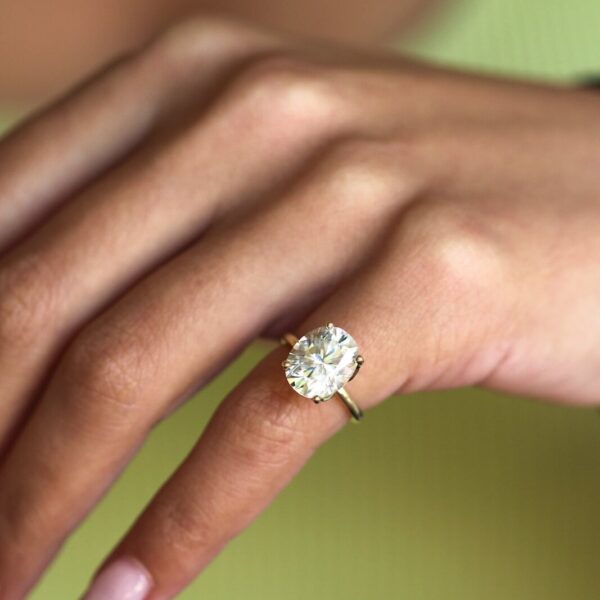
If you already know the shape you want, jump straight to oval, round, cushion, pear, emerald, or marquise. The full range sits in engagement rings.
What moissanite actually is
Moissanite is silicon carbide. The French chemist Henri Moissan first identified it in 1893, in fragments recovered from a meteorite crater in Arizona, and for decades it existed only in trace amounts too small to cut. Every moissanite gemstone sold today is grown in a laboratory, using a process that replicates the same crystal structure at a size and clarity that never occurs naturally.
That lab origin is not a compromise. It is the reason the stone is affordable at all, and it is the same production method used for lab grown diamonds. The two gemstones are chemically different, silicon carbide against pure carbon, and that difference is what gives moissanite its particular character rather than making it a lesser version of something else.
Because moissanite is a distinct mineral rather than a synthetic diamond, it carries its own grading and certification system. We supply GRA certification with every centre stone, which confirms the carbon and colour grade the same way a diamond report would, so you know exactly what you are buying before it ships.
Moissanite against diamond, in numbers
Two figures decide most of what you notice day to day: hardness, which determines how well the stone resists scratching, and refractive index, which determines how much light it bends and how bright the sparkle reads.
| Measure |
Moissanite |
Natural diamond |
| Mohs hardness |
9.25 |
10 |
| Refractive index |
2.65 |
2.42 |
| Dispersion (fire) |
0.104, more coloured flash |
0.044, more restrained |
| Origin |
Lab grown, silicon carbide |
Mined or lab grown, pure carbon |
| 1ct round, approximate price |
From R13,860 |
R45,000 and up, natural stone |
| Certification supplied |
GRA |
Varies by source |
The higher refractive index is the whole story behind moissanite’s reputation for sparkle. Light bends more sharply through it than through diamond, and the higher dispersion means more of that light splits into visible colour as it exits the stone. Diamond throws mostly white light. Moissanite throws white light with visible flashes of colour running through it, particularly in direct sun or under spotlighting. Neither is more correct, they are different optical signatures, and which one you prefer is a personal call rather than a quality judgement.
Hardness sits close enough that it makes no practical difference. At 9.25, moissanite is harder than sapphire and far harder than anything else you touch in daily life: keys, cutlery, most work surfaces. Below diamond’s 10, it can in theory be scratched by a diamond, but not by the objects that actually damage rings in normal wear.
Solid gold, not plated
Every centre stone and every band is set in solid gold or platinum. Nothing here is plated, filled, or vermeil.
This distinction matters more than most buyers realise at the point of purchase. A plated ring has a thin layer of gold over a base metal underneath, and that layer wears through with regular contact, showing the base metal beneath it within a year or two of daily wear. A solid gold ring is the same material all the way through the band, so there is no coating to wear off.
Every design across this page is built in 9ct gold, 18ct gold, or platinum, in yellow, white, or rose tones. None of it is plated. That’s why these rings can be resized, refinished, and repaired indefinitely rather than replaced once a surface layer wears away.
Moissanite against lab grown diamond
Since we cut both, this is the comparison our customers actually make most often, not moissanite against a natural stone they were never going to afford at this size.
| Measure |
Moissanite |
Lab grown diamond |
| Hardness |
9.25 |
10, identical to natural diamond |
| How it looks |
More coloured flash, visible fire |
White brightness, crisp and restrained |
| Certification we supply |
GRA |
IGI |
| 1ct round solitaire, 9ct gold, from |
R13,860 |
R19,495 |
| Best suited to |
Buyers who want maximum size and sparkle per rand |
Buyers who want the closest optical match to a natural diamond |
Chemically, a lab grown diamond is identical to a mined one: carbon arranged in the same crystal lattice, graded on the same 4Cs scale. Moissanite is not trying to be that. It is a harder-wearing, brighter-flashing, lower-cost stone in its own right. If budget is the deciding factor, moissanite gives you more carat and more setting detail for the same spend. If you want the exact optical signature of a mined diamond without the mined price, our lab grown diamond engagement rings collection is the better match. Both are made in the same workshop, so switching between them on any design is usually a simple swap.
What a moissanite engagement ring costs, by style
Price in this category tracks setting complexity and centre stone size far more than it tracks the moissanite itself, see what moissanite actually is and how it compares to diamond and lab grown diamond if you want that context first. A four claw solitaire and a pavé trilogy in the same carat weight can sit R6,000 apart, and the difference is entirely in the metal work and the accent stones.
| Style |
What it is, and price from |
Example |
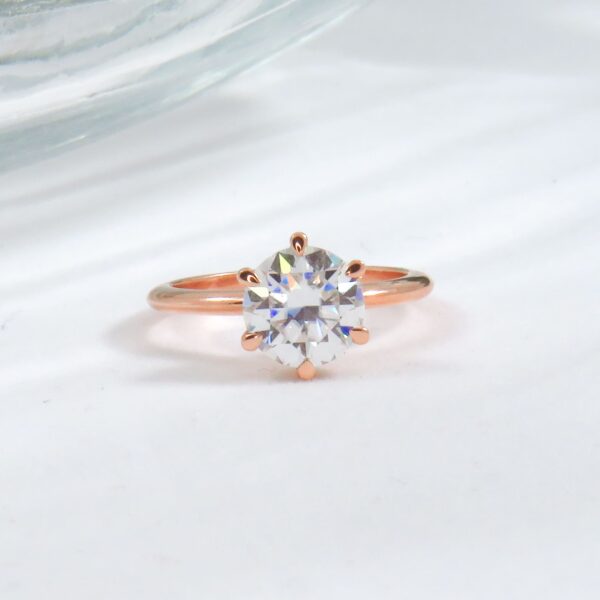
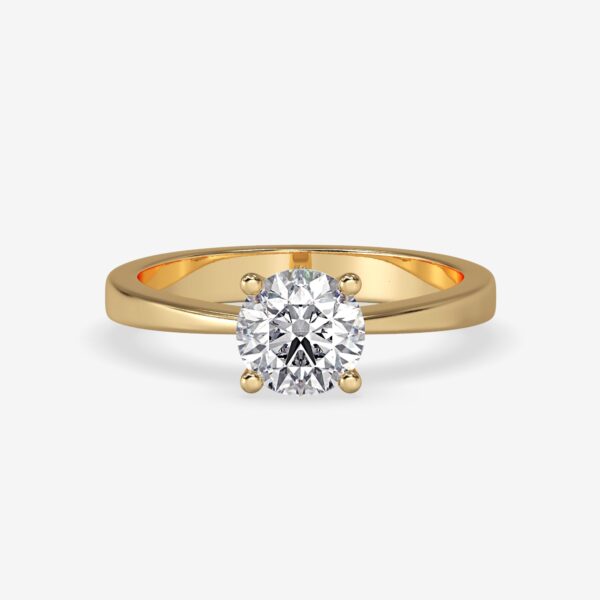
| Solitaire |
A single centre stone, no accent stones. From R12,950. |
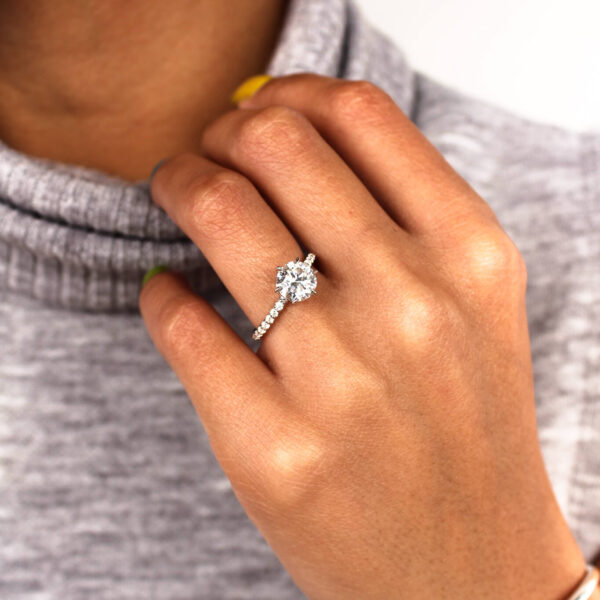
Round Moissanite Pave Engagement Ring 0.80ct |
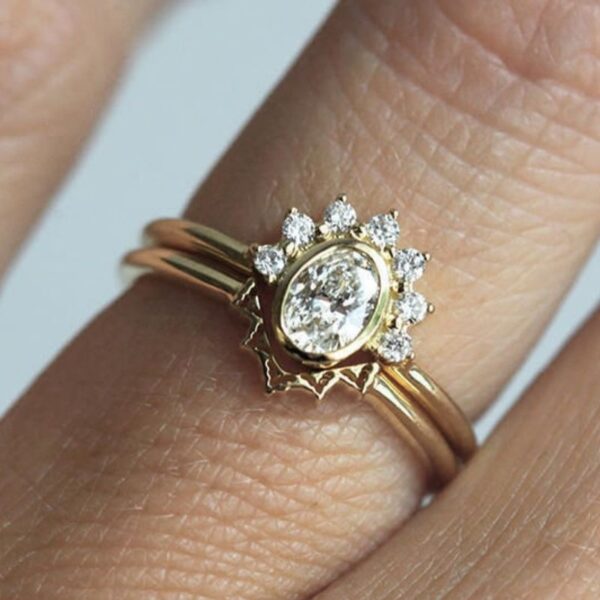
| Hidden halo |
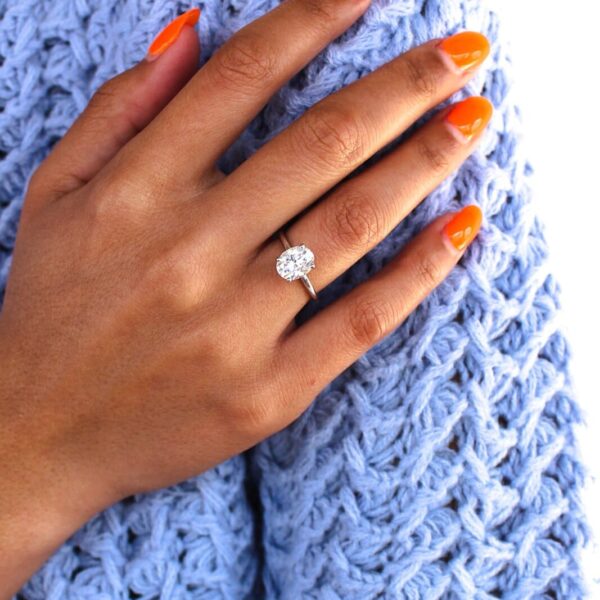
A ring of small stones under the centre stone, invisible from above. From R14,950. |
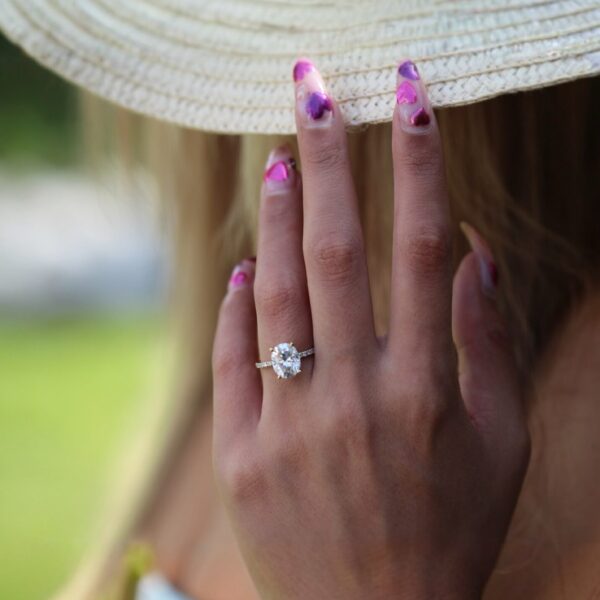
Classic Oval Moissanite Hidden Halo Engagement Ring |
| Bezel |
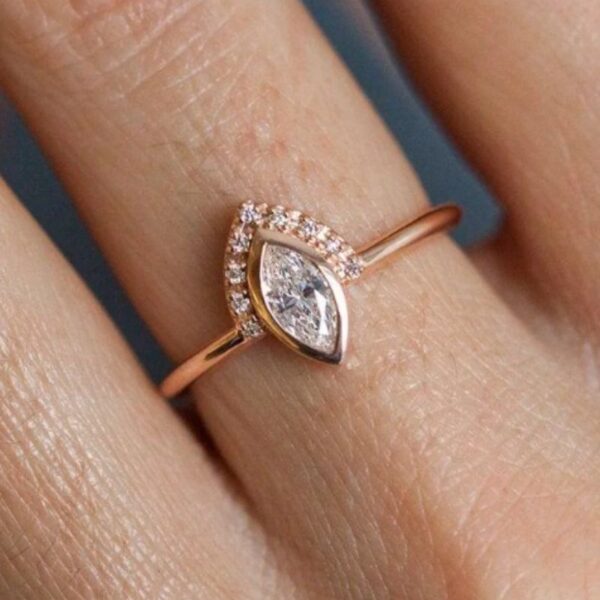
A metal rim around the stone, no claws. From R15,900. |
Marquise Bezel Engagement Ring |
| Pavé |
Small stones set along the band itself. From R15,990. |
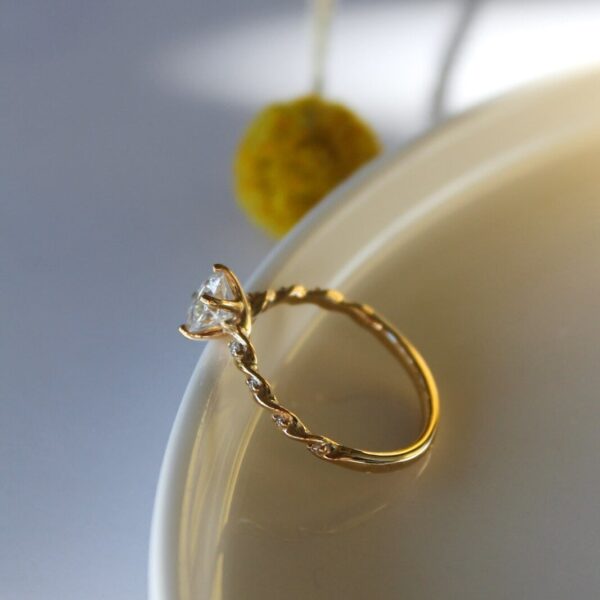
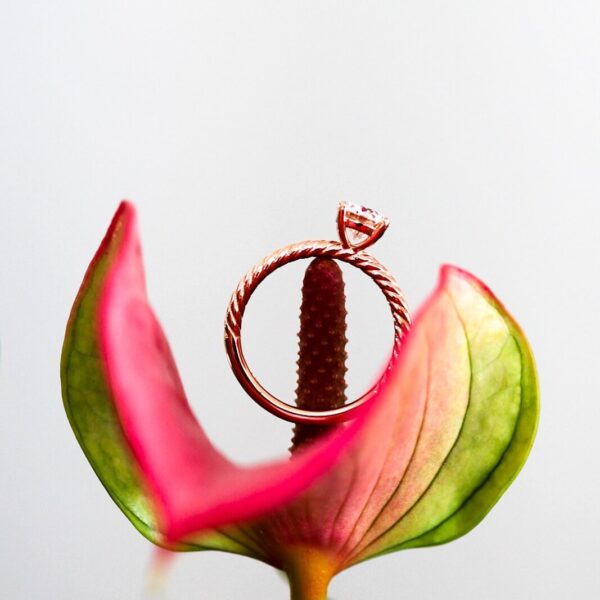
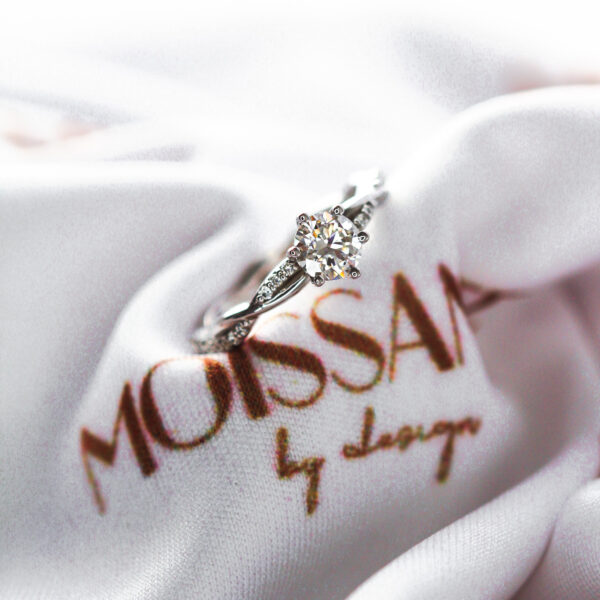
Moissanite Solitaire Twist Engagement Ring |
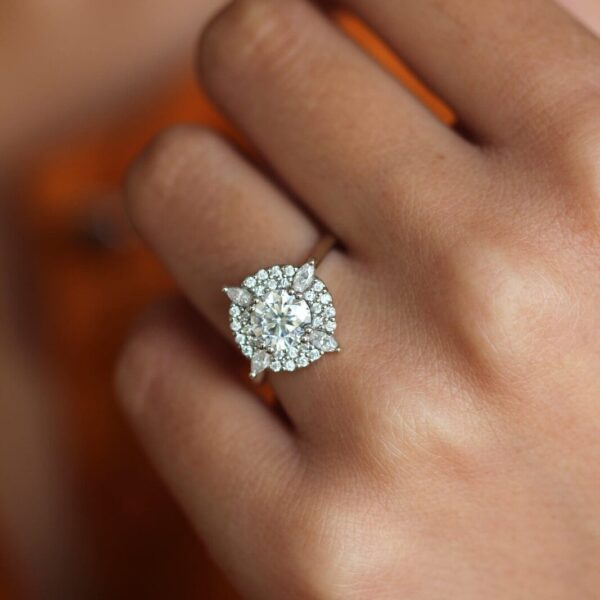
| Halo |
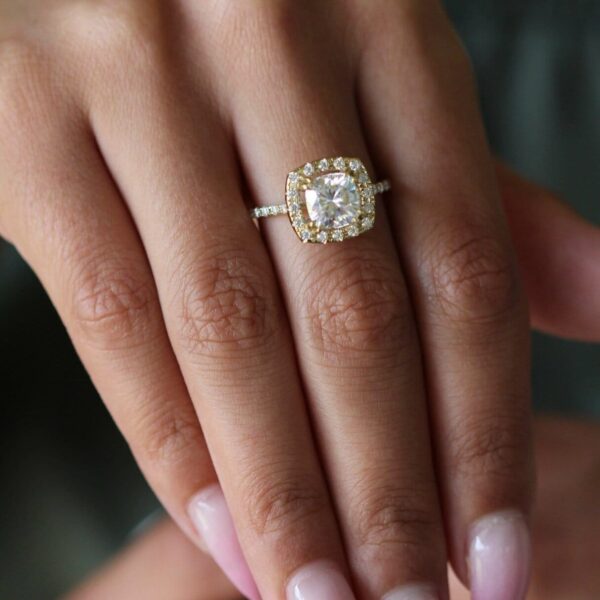
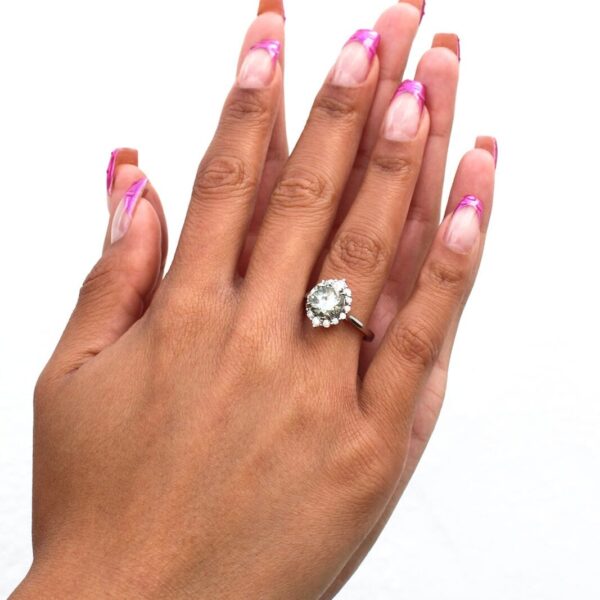
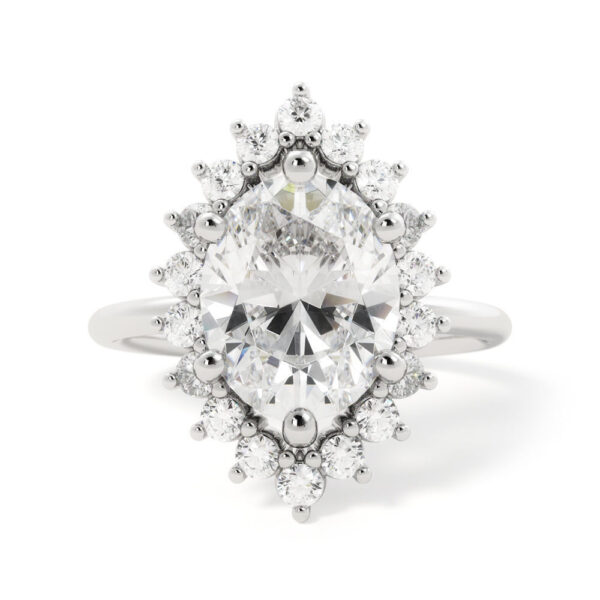
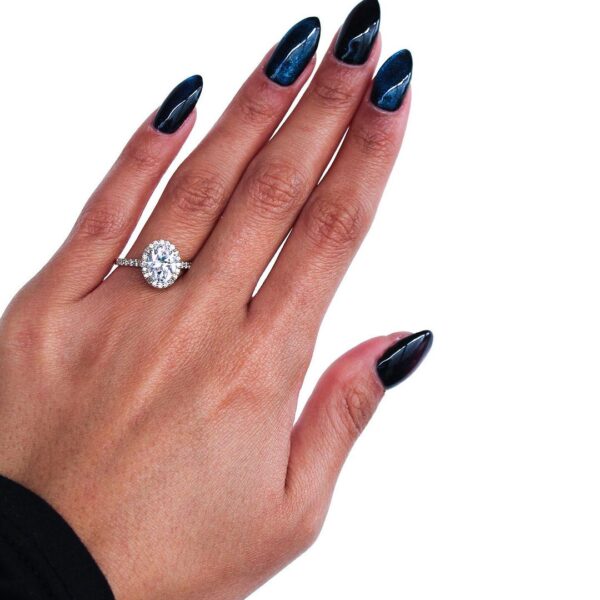
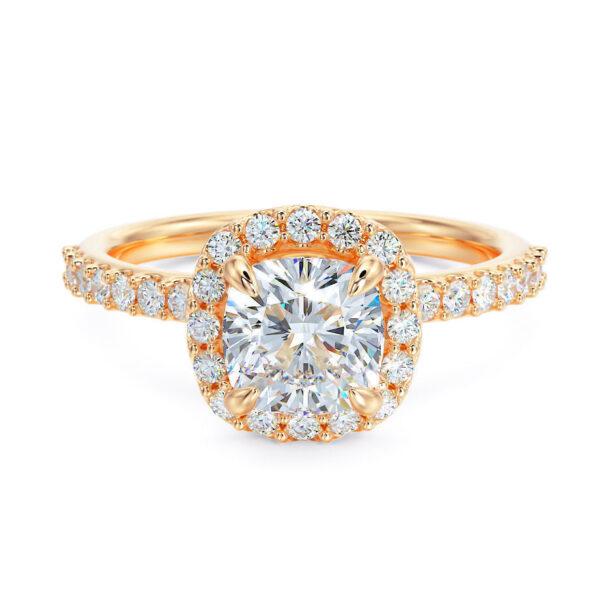
A visible ring of stones surrounding the centre stone. From R15,950. |
Halo Oval Engagement Ring |
| Cluster |
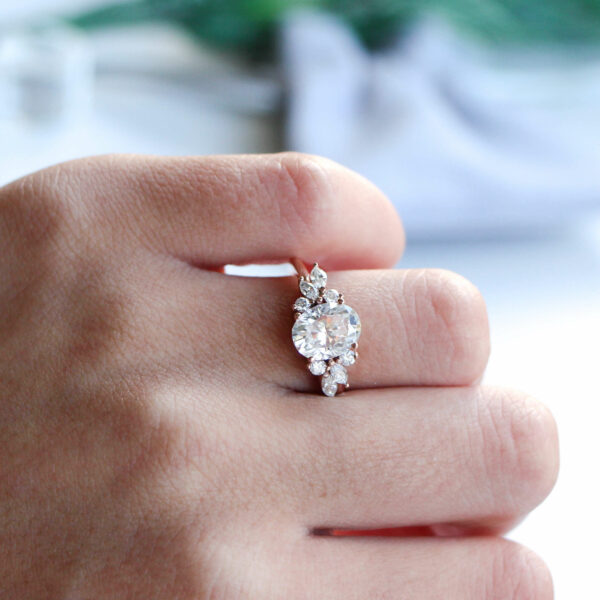
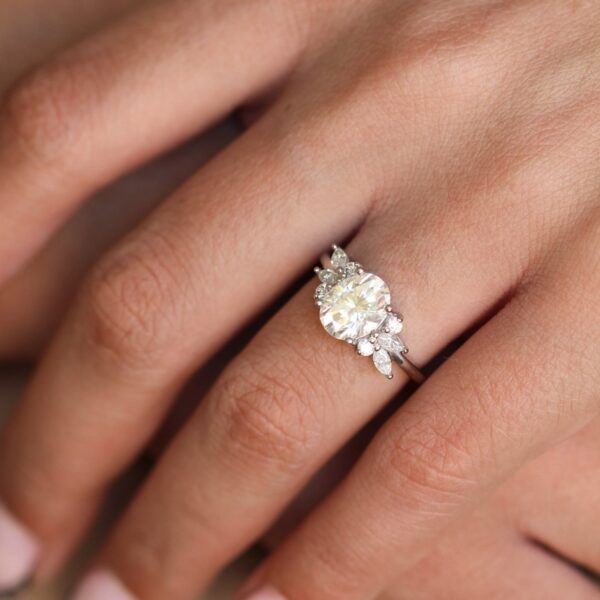
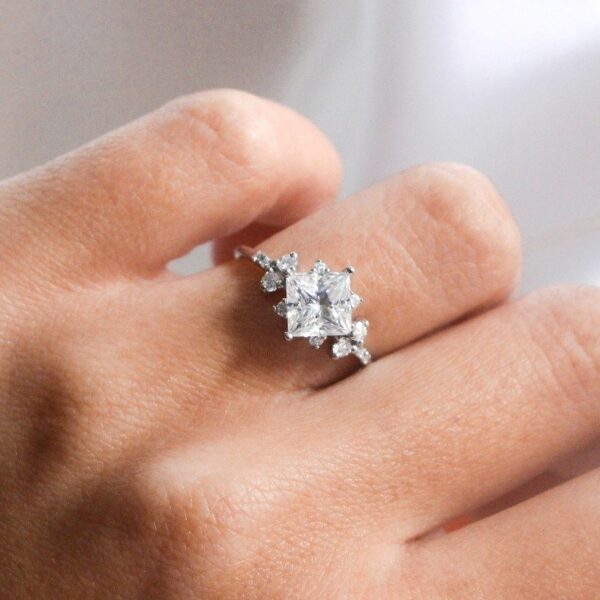
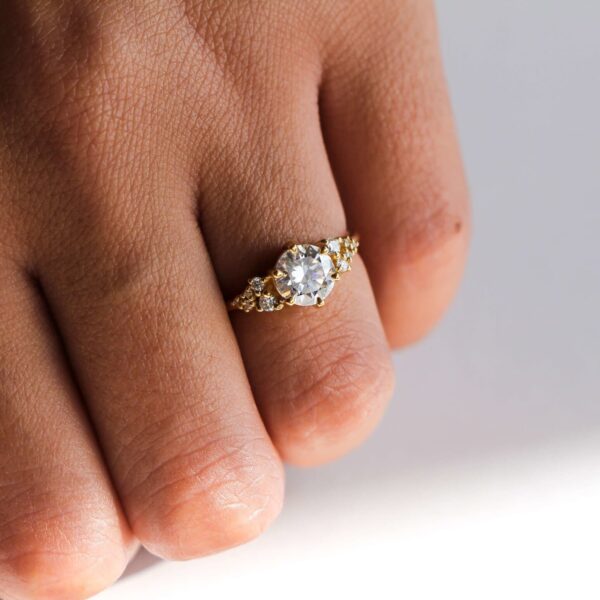
Several stones grouped to read as one larger shape. From R16,250. |
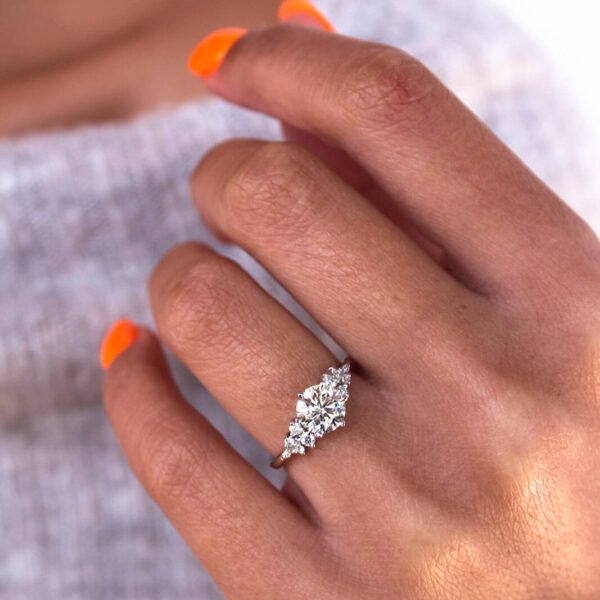
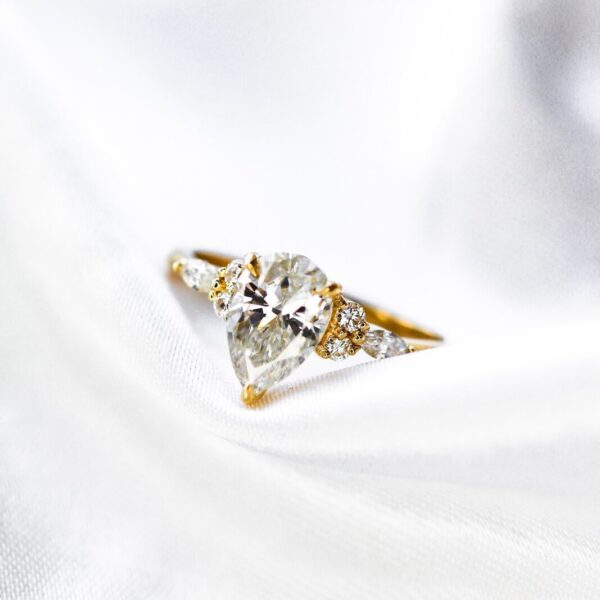
Pear And Round Moissanite Cluster Engagement Ring – Adina |
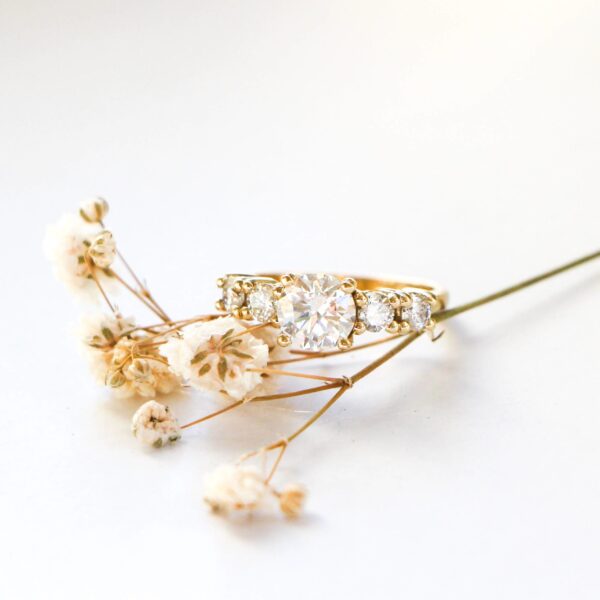
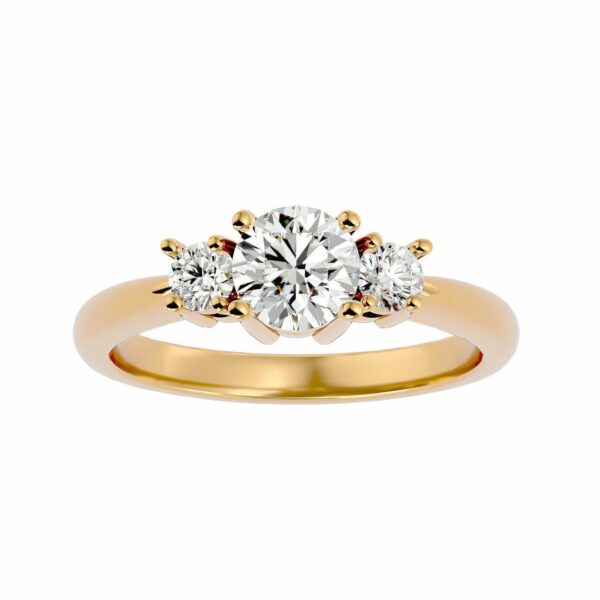
| Trilogy |
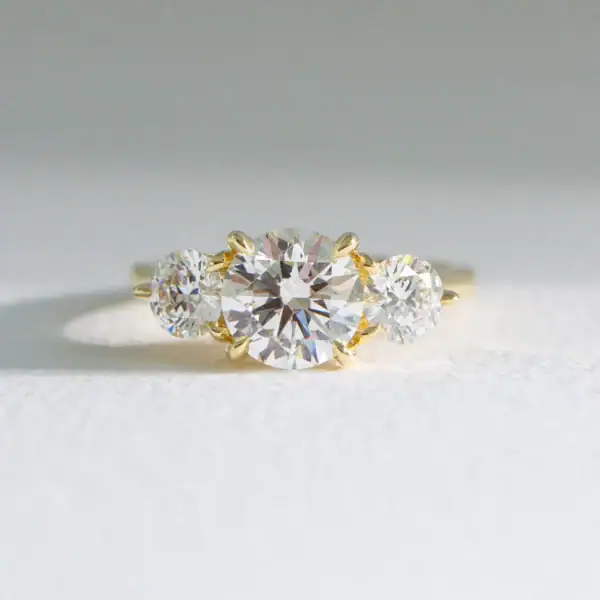
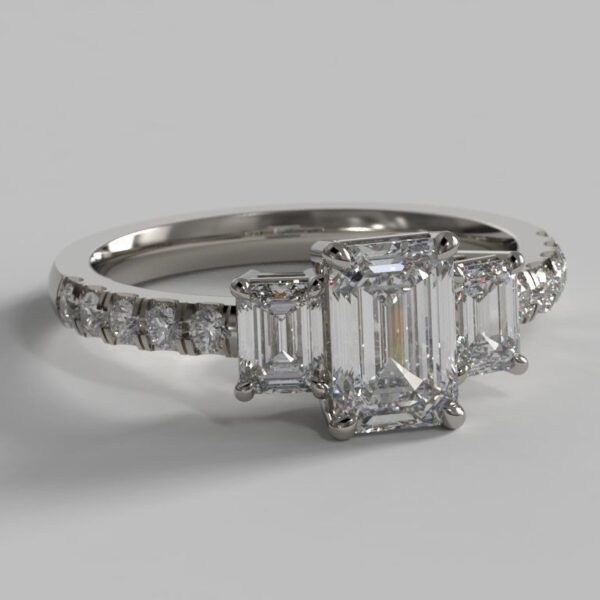
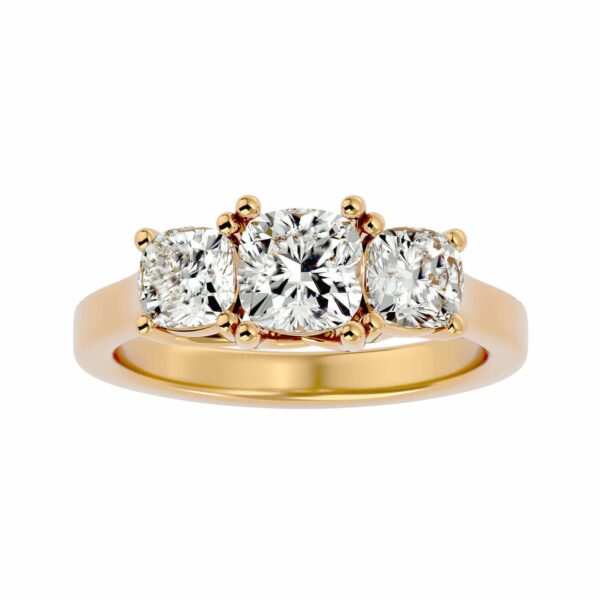
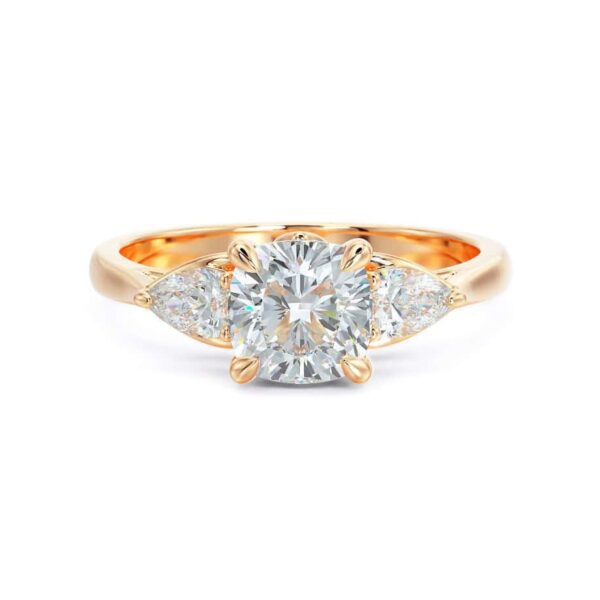
Three stones set in a row. From R16,520. |
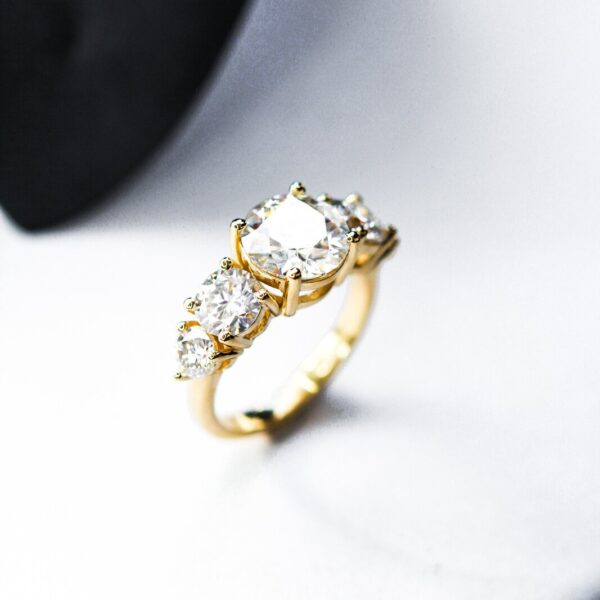
1ct Moissanite Cushion Trilogy Engagement Ring |
| Toi et moi |
Two centre stones side by side, no shared setting. From R27,560. |
Toi et Moi Emerald And Pear Moissanite Engagement Ring |
Solitaire is the entry point for a reason. It puts every rand into the centre stone rather than into accent work, so it is where buyers land when they want the largest carat weight the budget allows. Hidden halo is the style we sell the most of at the mid range, since it makes a stone read as visibly larger without the visible halo ring that some buyers find dated.
What it costs, by shape
Shape affects the price of a moissanite engagement ring two ways. Fancy shapes like oval and marquise face up larger than round for the same carat weight, so buyers often size down slightly and land at a similar price. And shapes with more points, marquise, pear, heart, need extra claw work to protect the tips, which adds a small premium to otherwise comparable settings.
| Shape |
How it reads |
From |
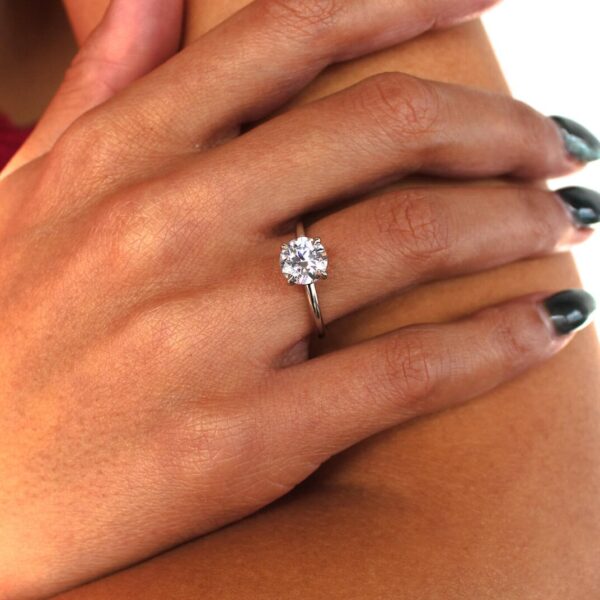
| Round |
Maximum brilliance, the classic choice |
R12,950 |
| Oval |
Faces up larger than round, elongates the finger |
R13,860 |
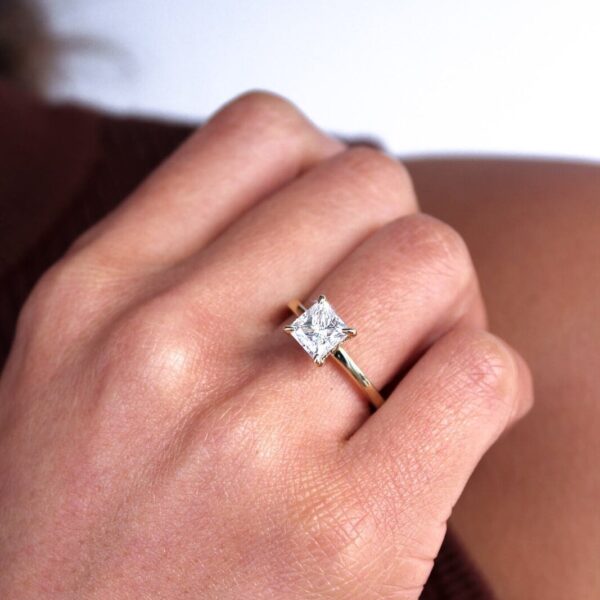
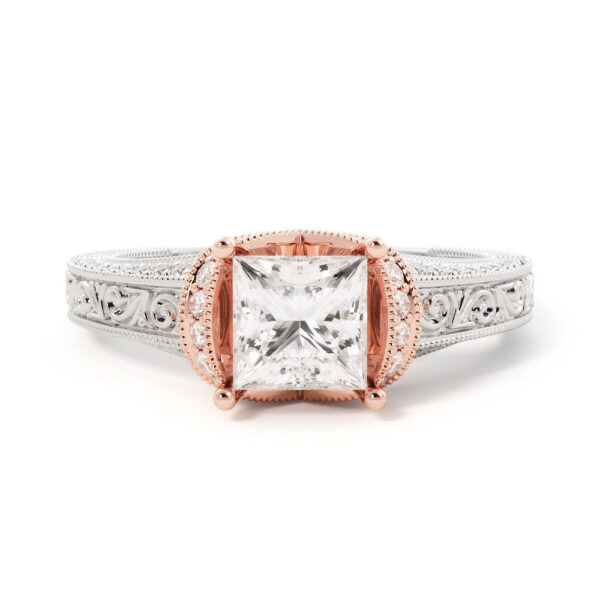
| Princess |
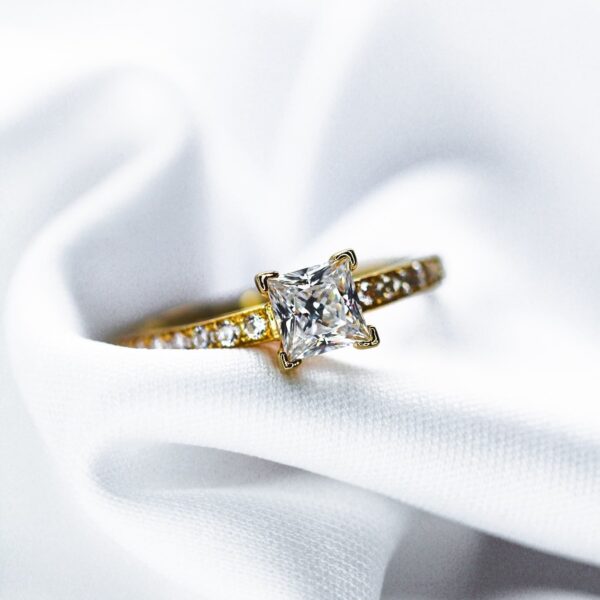
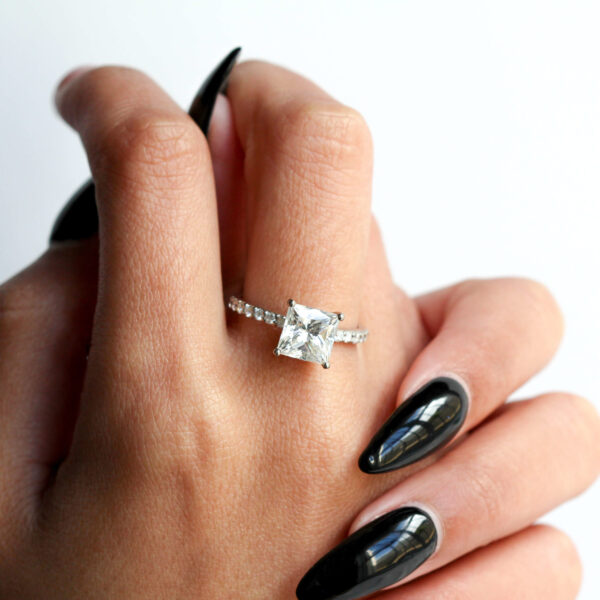
Square outline, sharp corners, strong light return |
R12,990 |
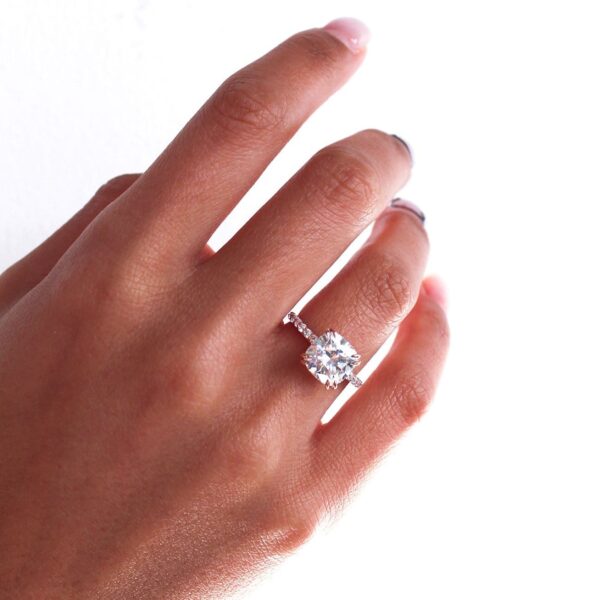
| Cushion |
Rounded corners, softer and more vintage |
R14,950 |
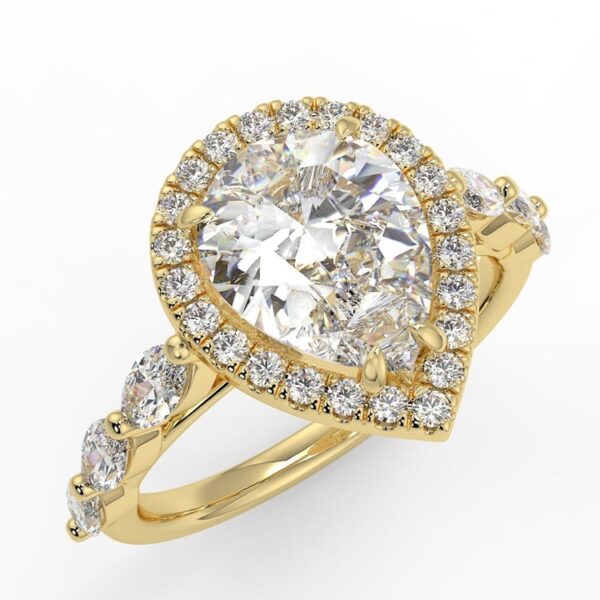
| Pear |
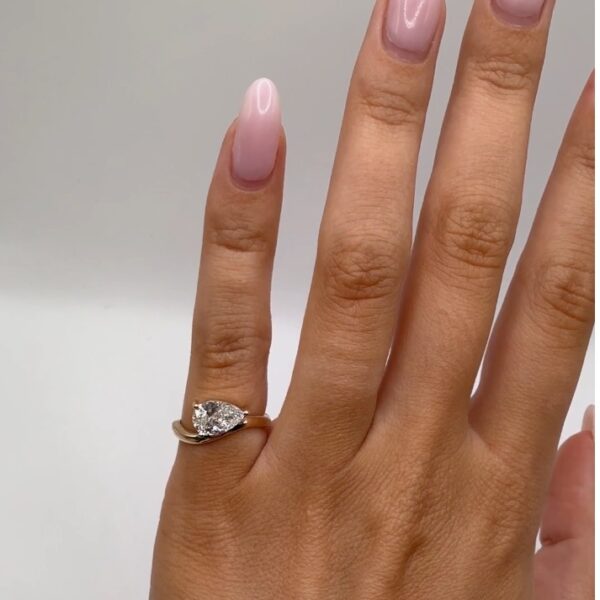
A single point, worn with the point toward the hand |
R14,950 |
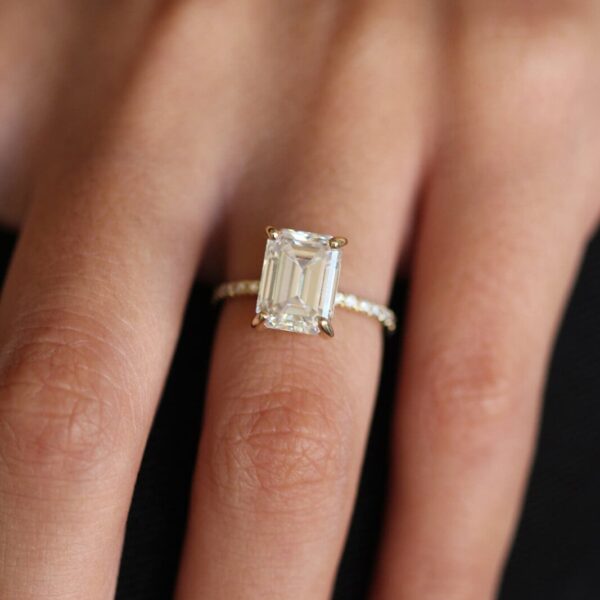
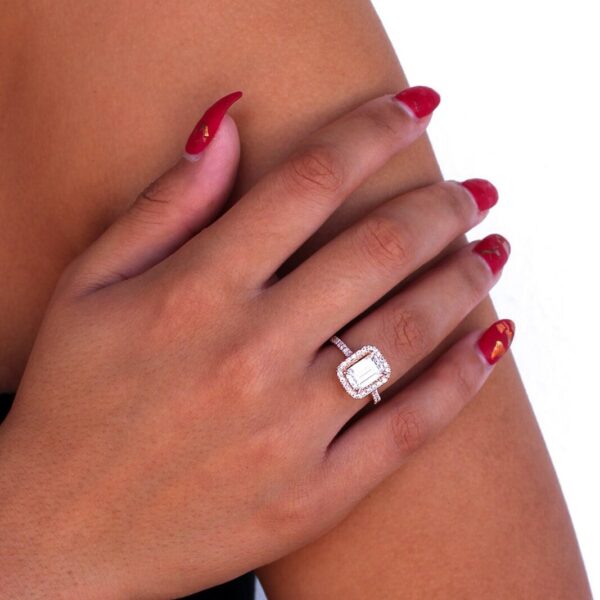
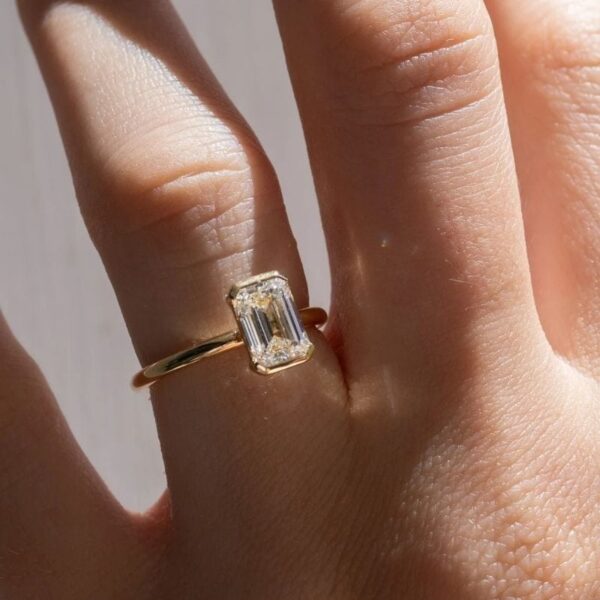
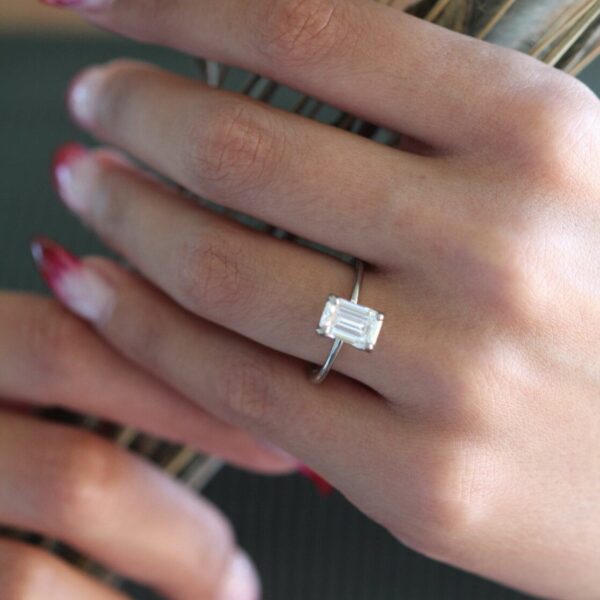
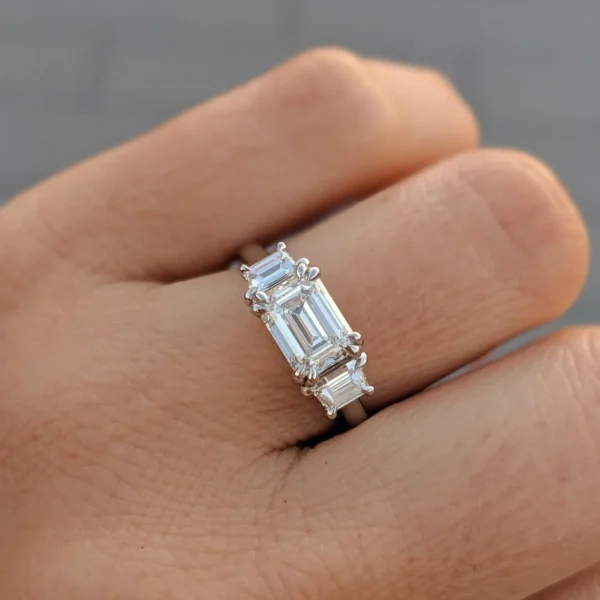
| Emerald |
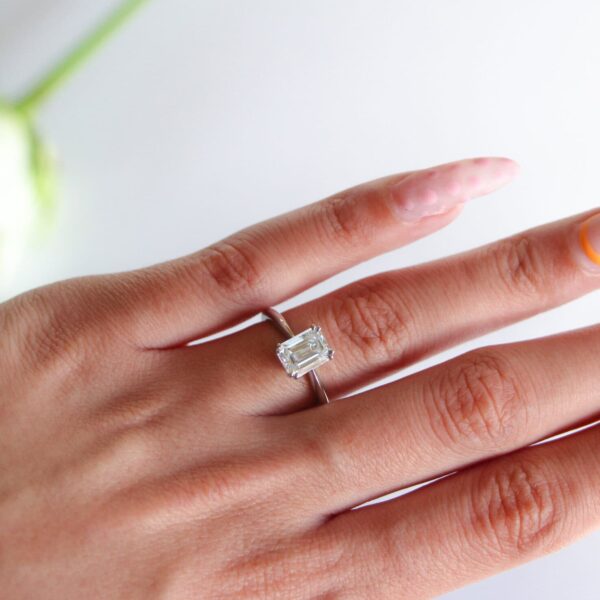
Step cut facets, less fire, more clarity on show |
R15,750 |
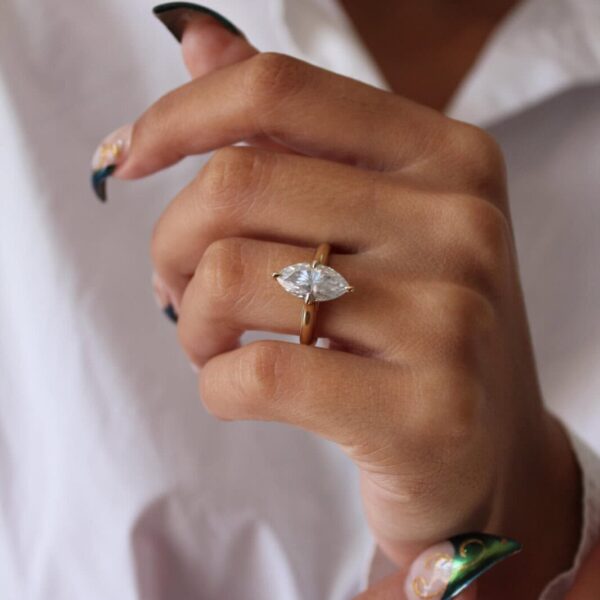
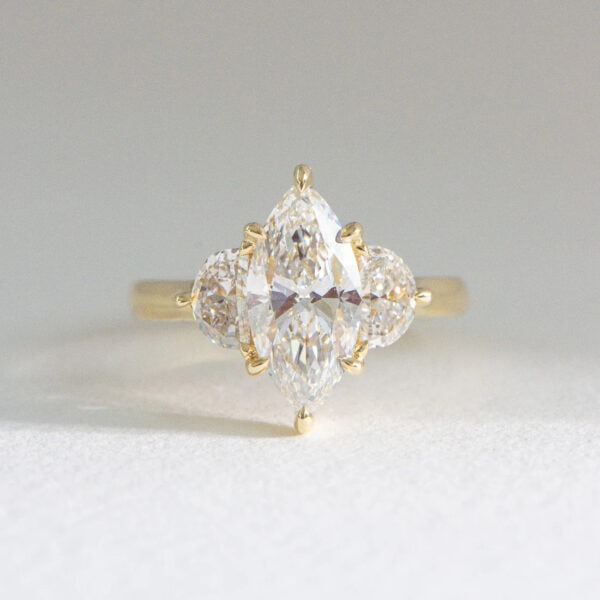
| Marquise |
Two points, the most elongating shape available |
R13,860 |
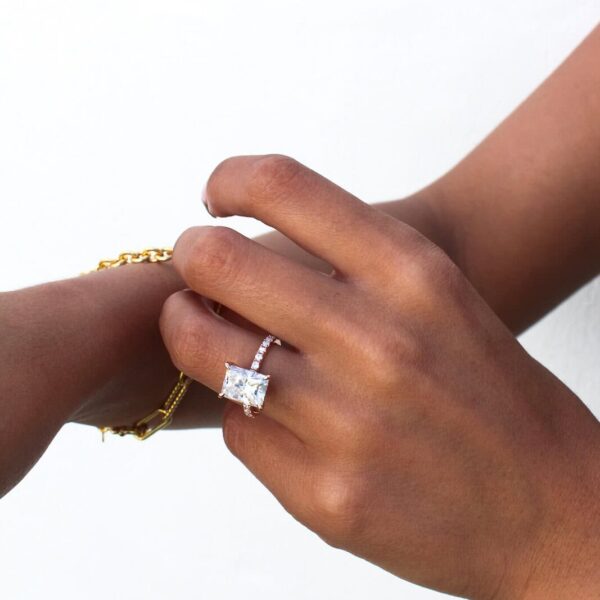
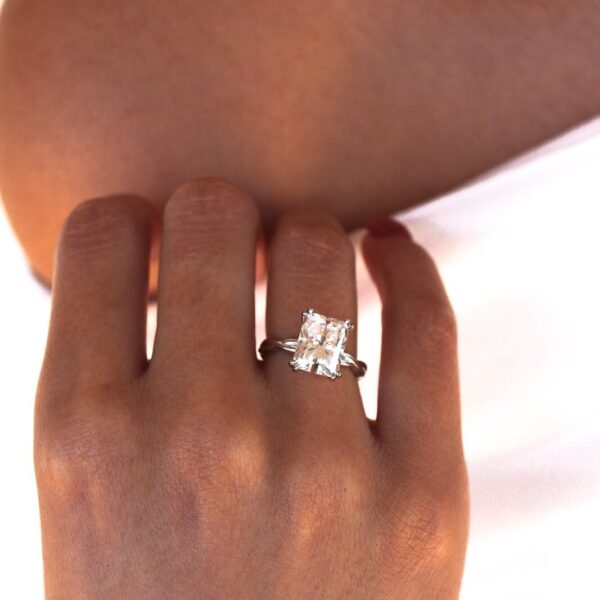
| Radiant |
Cropped corners, brilliant cut facets in a rectangular outline |
R13,680 |
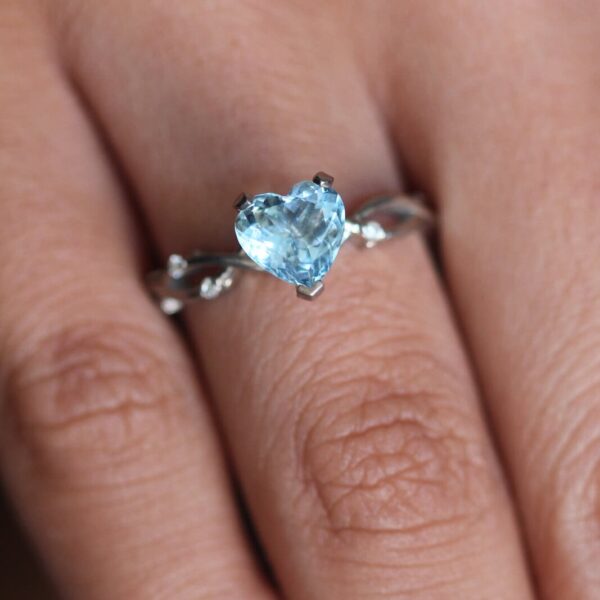
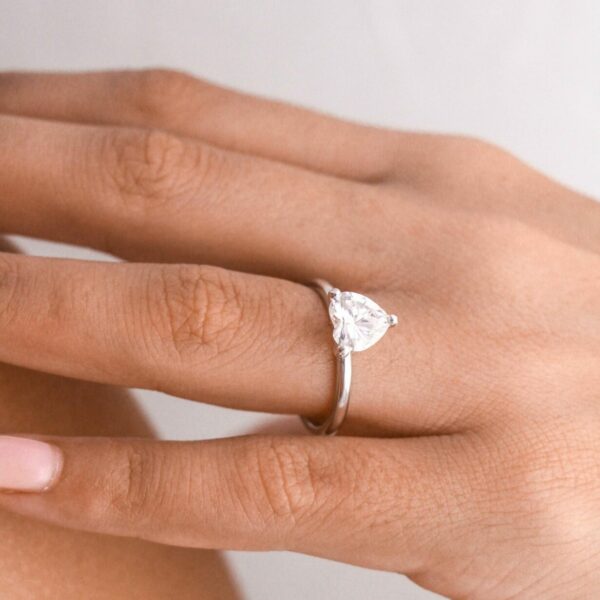
| Heart |
Distinctly romantic, needs precise claw placement |
R14,890 |
Round remains the shape most buyers default to, and for good reason. Its facet pattern is engineered specifically to maximise light return, so carat for carat it reads brightest under most lighting. Oval and marquise are the two shapes we get asked about as an alternative, mainly because they visually stretch a shorter finger and because a 1ct stone in either shape looks closer to 1.2ct in a round.
Solitaire, halo, and the rest, explained
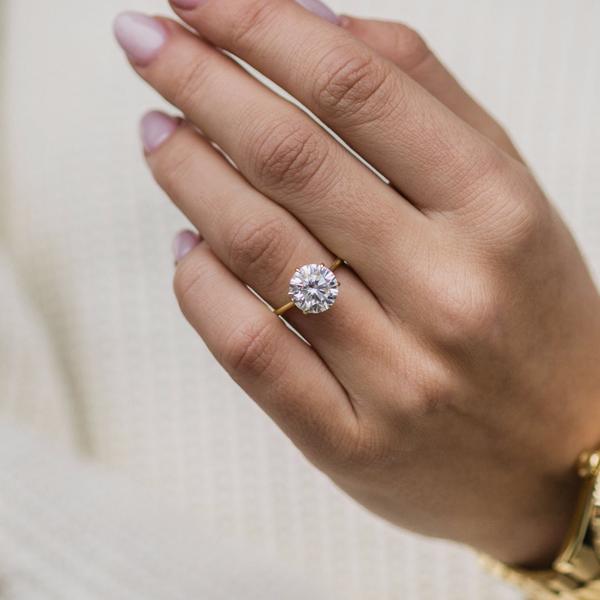
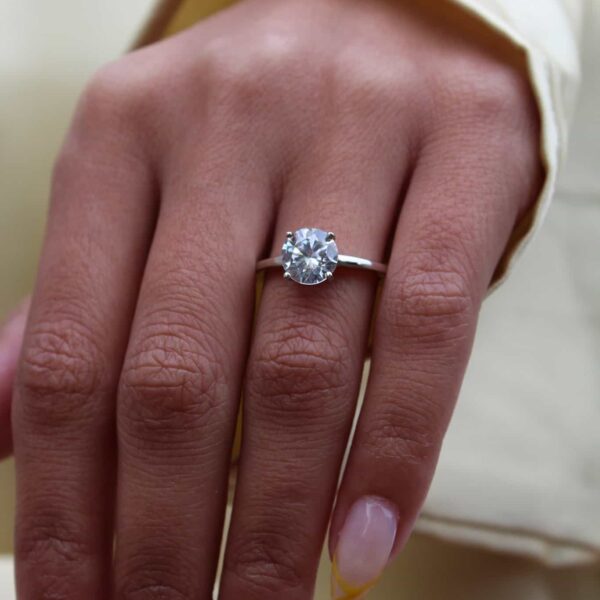
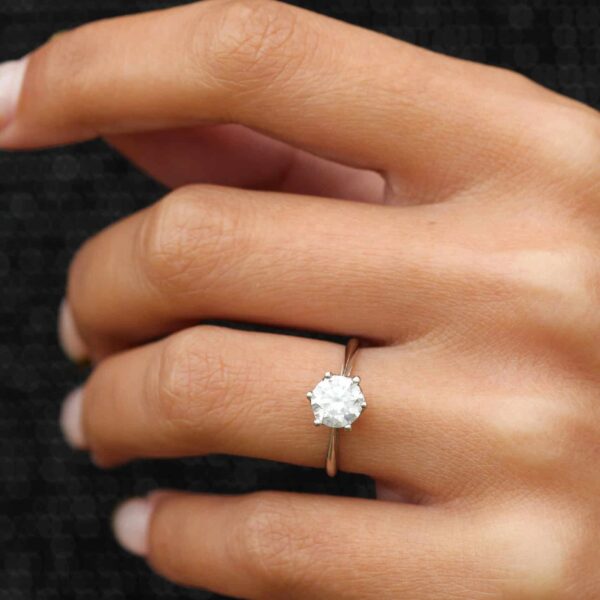
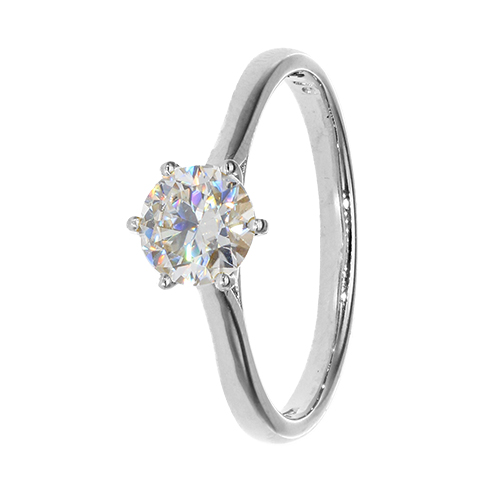
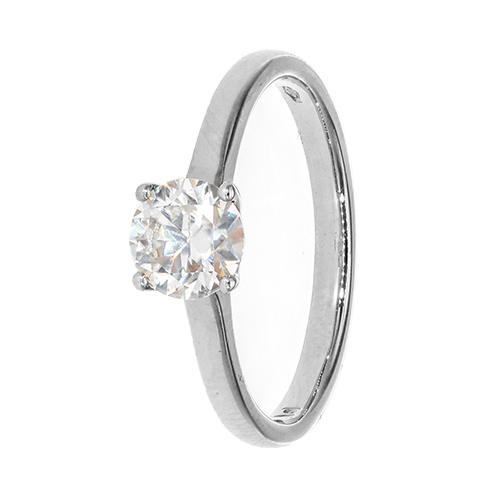
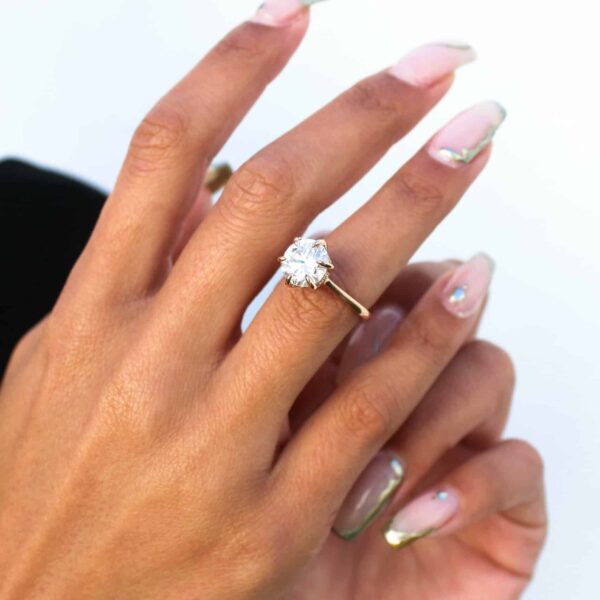
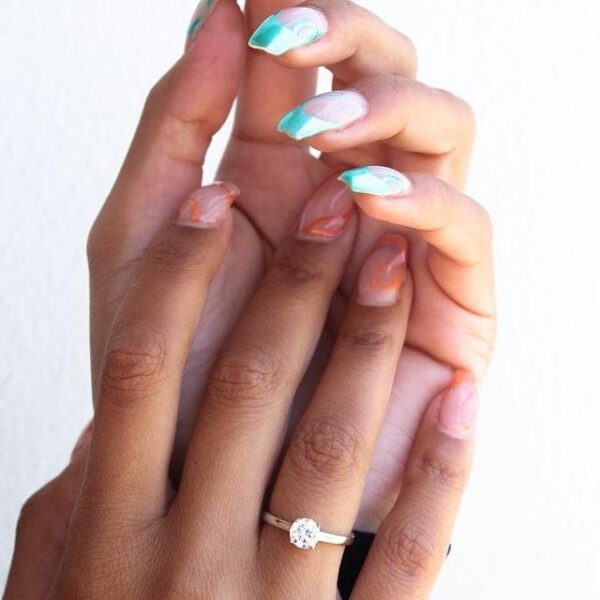
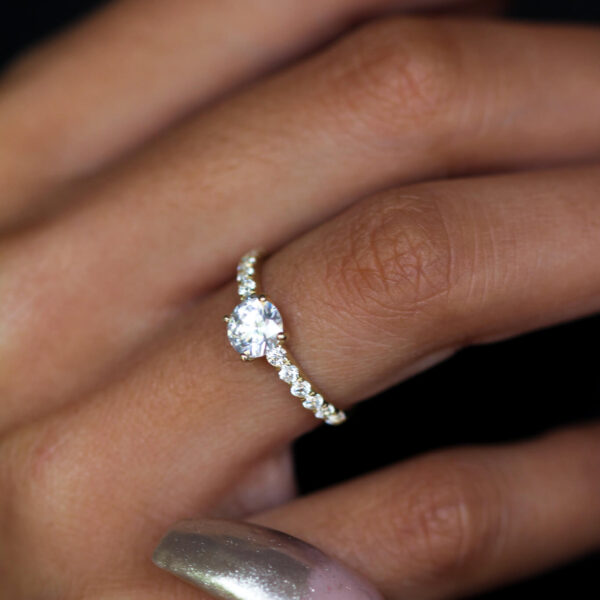
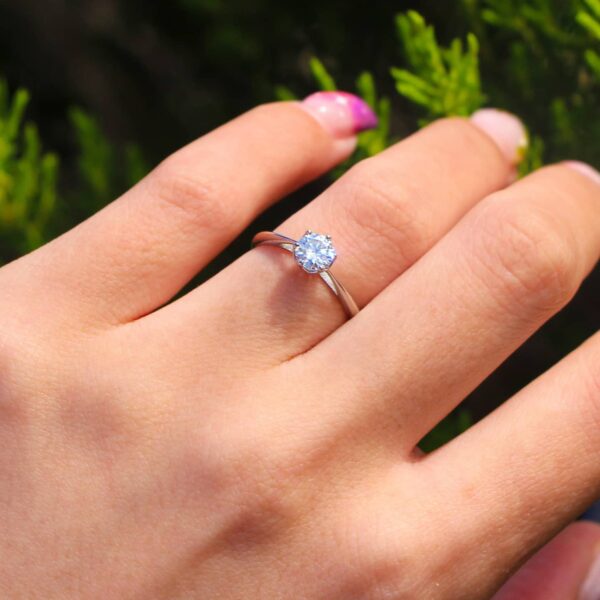
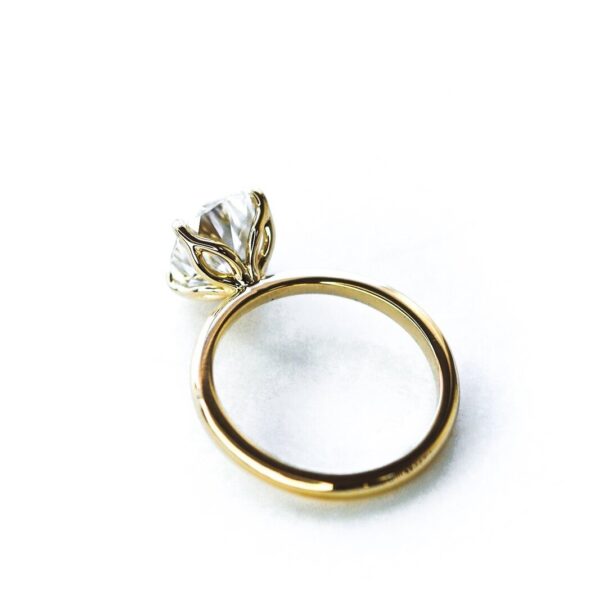
A solitaire setting holds the centre stone alone, usually on four or six claws. It is the style that ages best, since there is nothing dated about a single well cut stone, and it is the easiest to pair with a plain wedding band afterward.
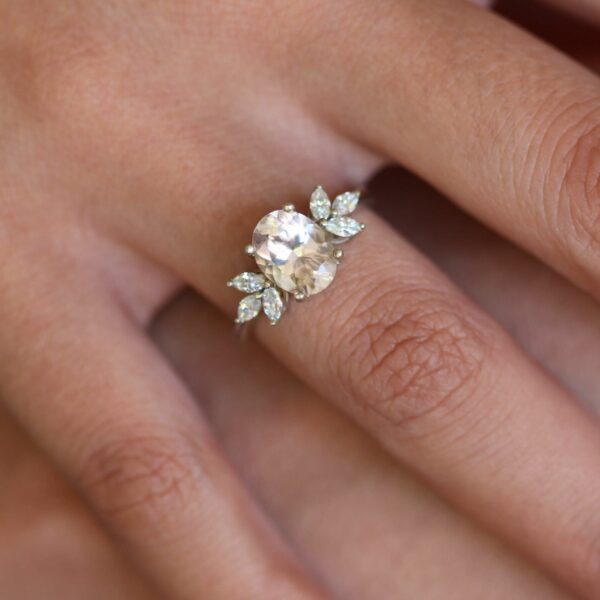
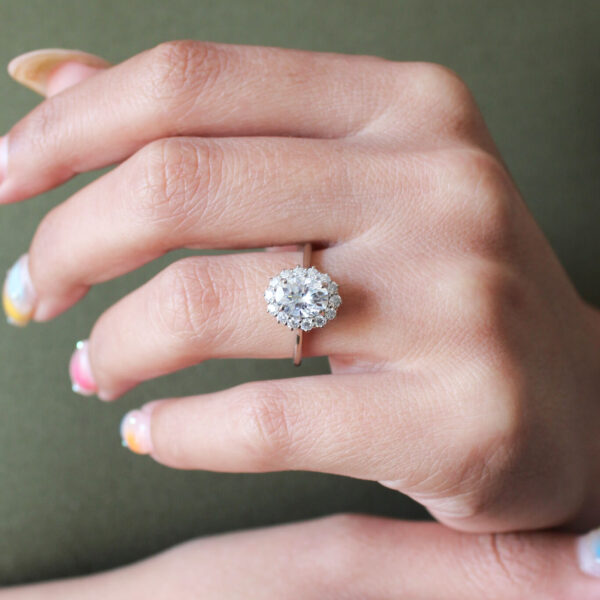
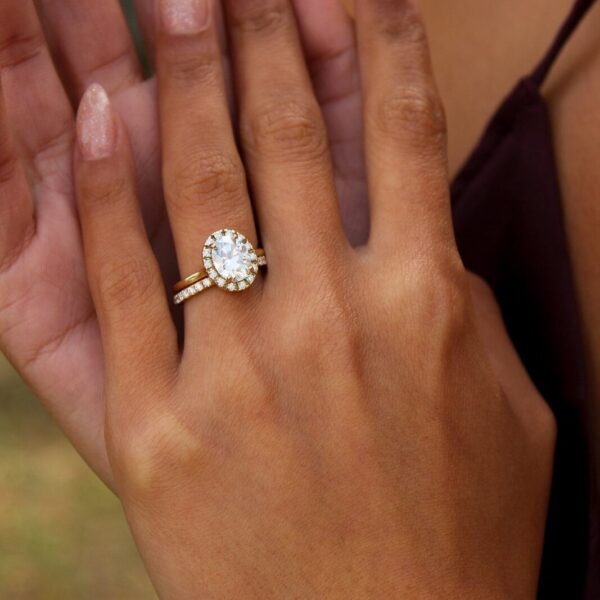
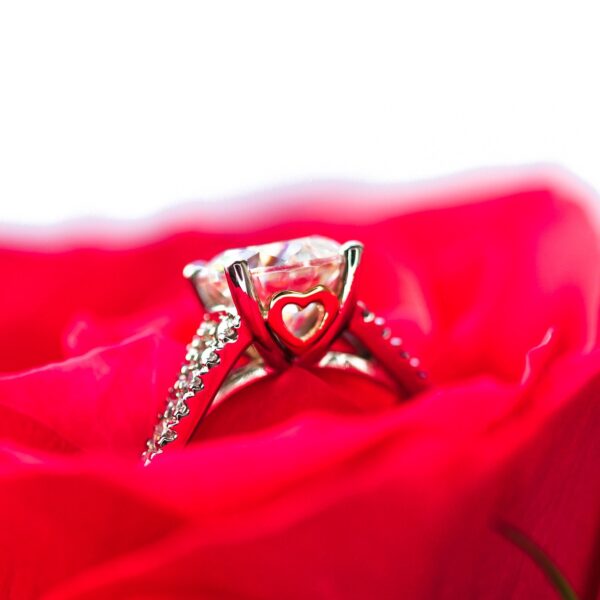
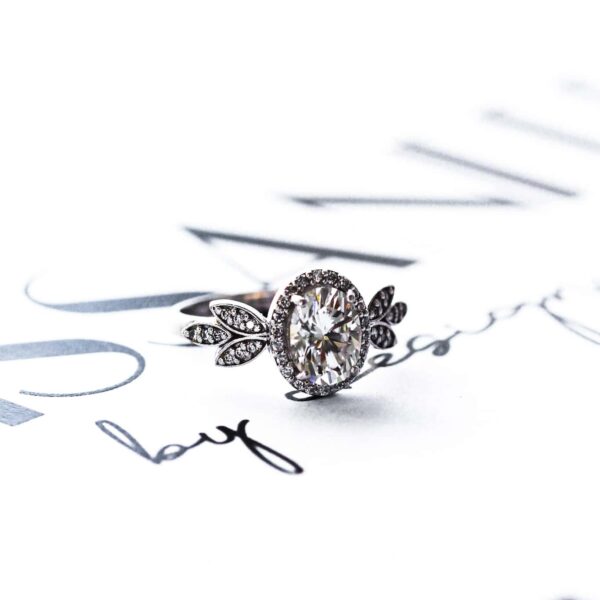
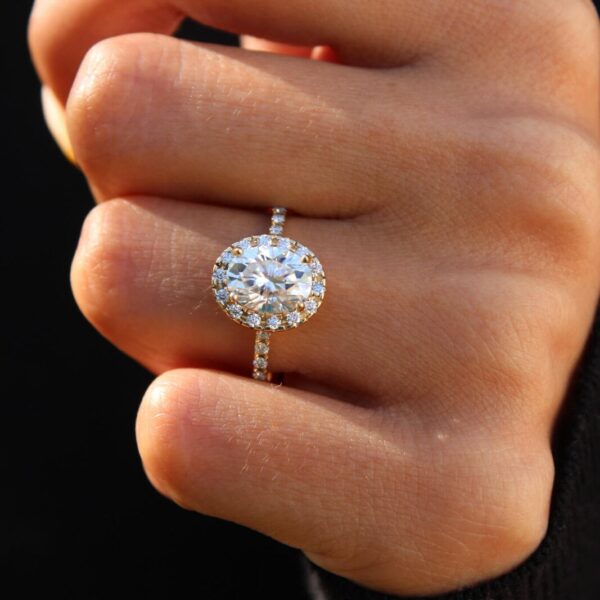
A hidden halo hides a second ring of stones underneath the centre stone, visible only from the side. It adds perceived size without changing the ring’s silhouette from above, which is why it has become one of our most requested details across every shape.
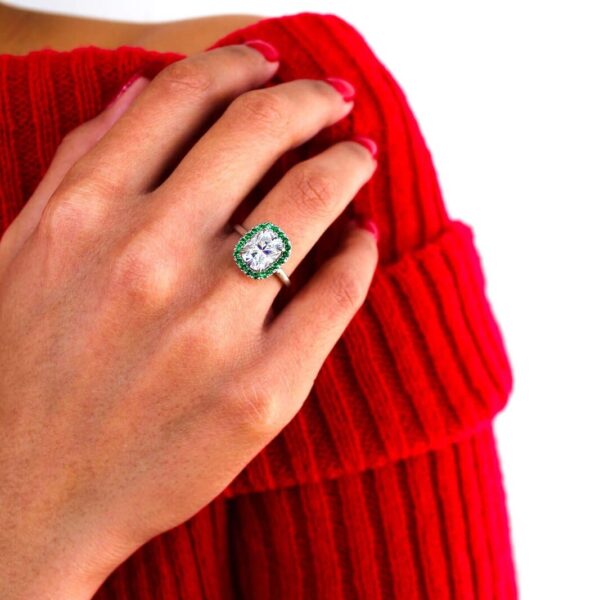
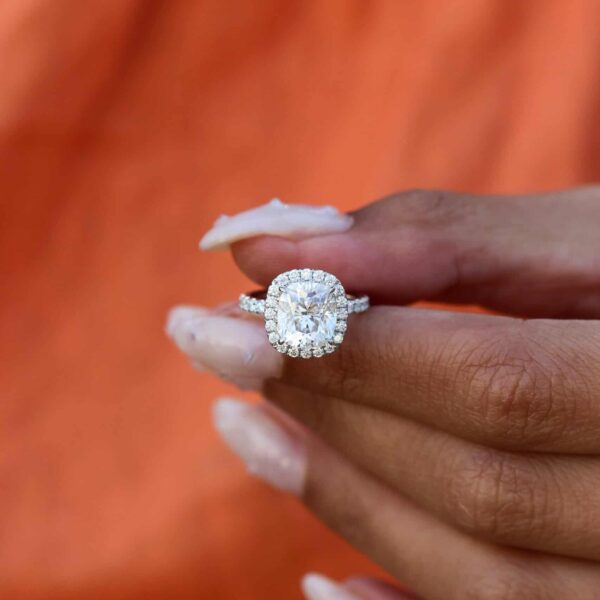
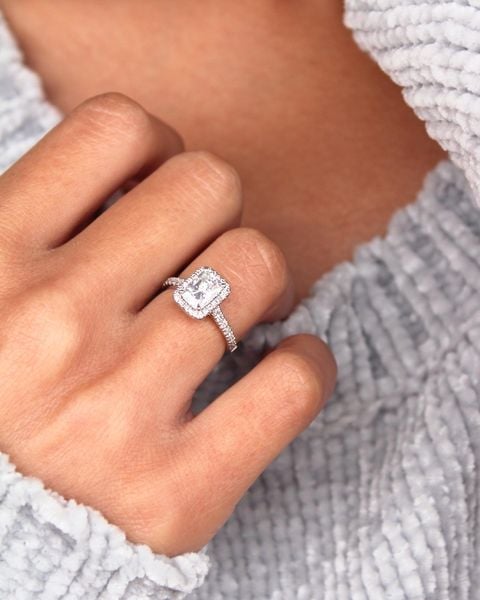
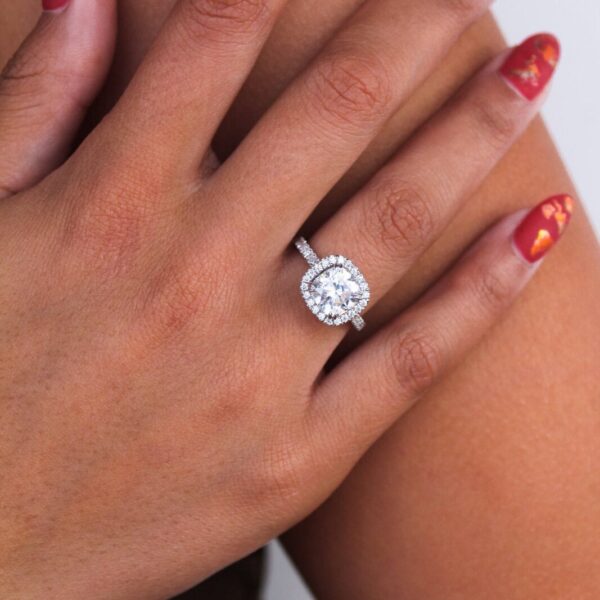
A visible halo surrounds the centre stone in full view, and it does two things a solitaire cannot: it makes a smaller centre stone read larger, and it adds sparkle across a wider area of the hand. It suits buyers who want maximum visual impact per rand spent.
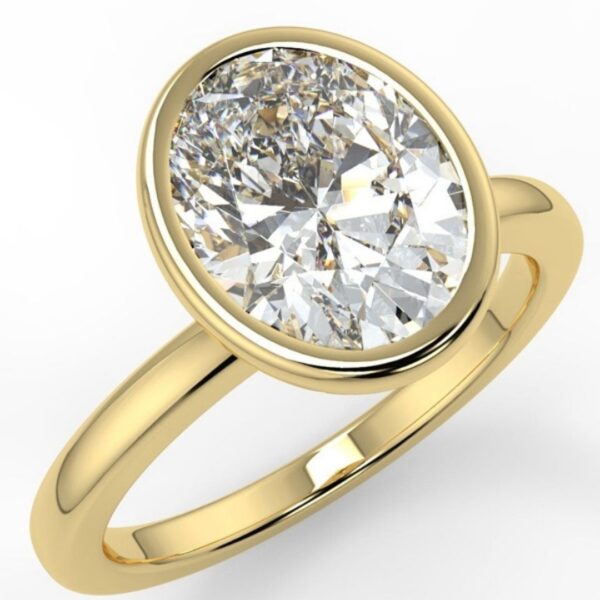
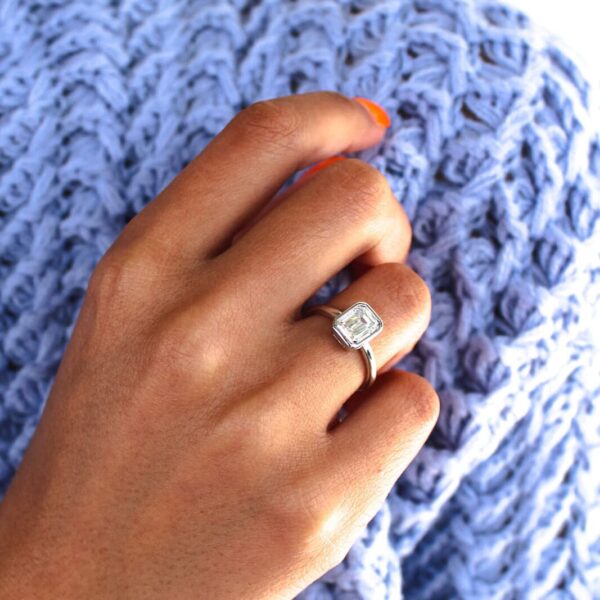
A bezel wraps the stone’s outline in a rim of metal rather than holding it with claws. It protects the edges of the stone completely, which matters most on pointed shapes like marquise and pear, and it gives a cleaner, more modern line that suits anyone who works with their hands often.
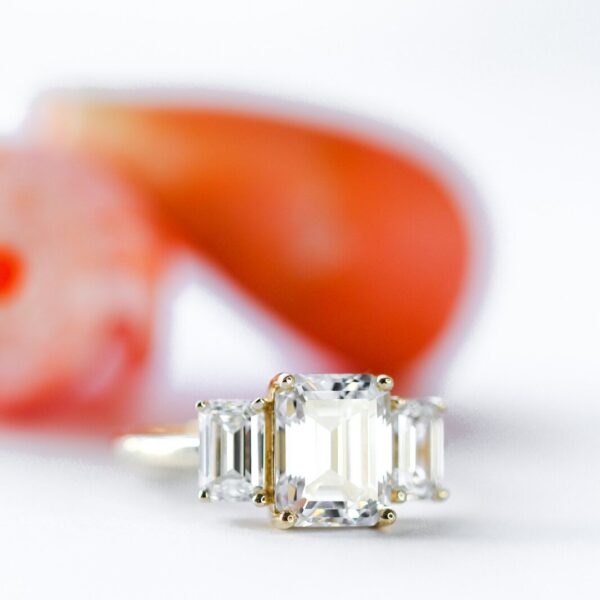
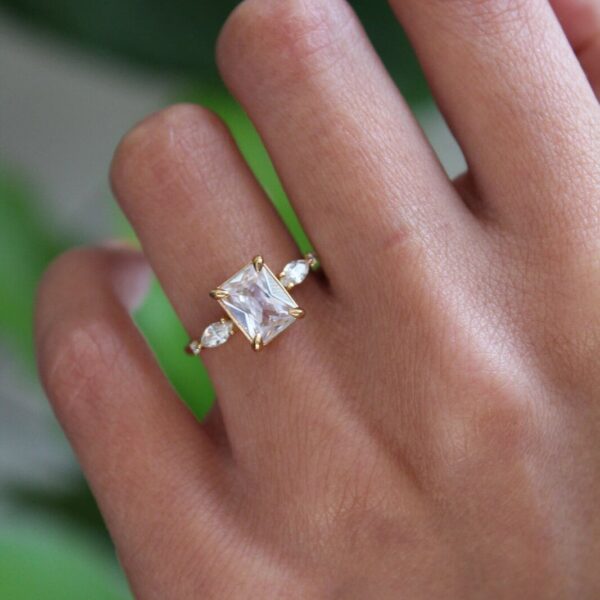
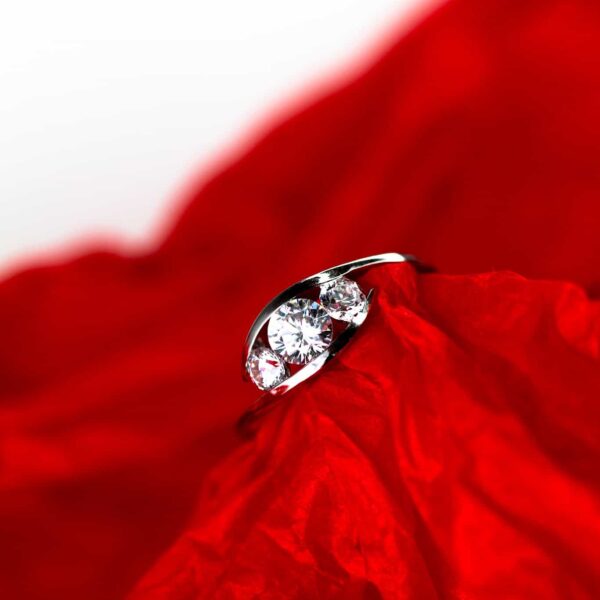
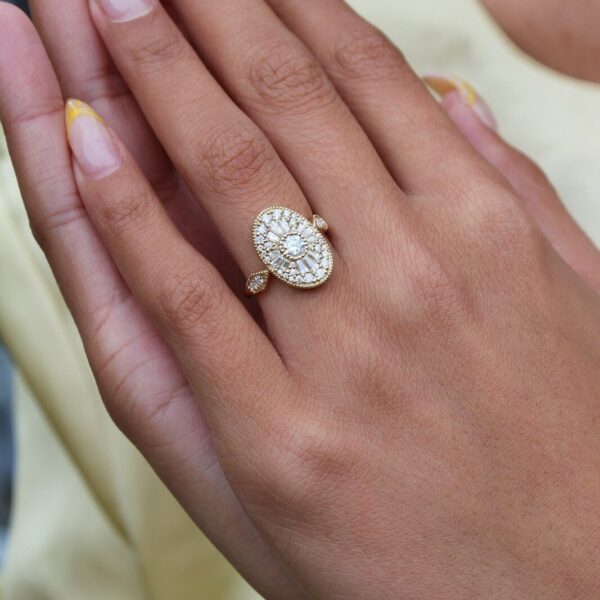
Trilogy settings place three stones in a row, traditionally read as past, present and future. Cluster settings group several smaller stones so they read as one larger shape from a distance, which is the more budget conscious way to reach a bigger look. Pavé carries small stones along the band itself, adding sparkle to the hand even when the hand is closed. A toi et moi ring sets two centre stones side by side rather than one, and it is the style we make almost entirely to custom order, since the two stone shapes and sizes are rarely off the shelf.
Choosing a shape
Round brilliant is the shape most people picture when they hear the word engagement ring, and it earns that position on light return alone. Its 58 facet pattern was designed specifically to maximise brightness, and no other shape matches it under mixed lighting.
Oval and marquise both elongate the finger and face up larger than a round of equal carat weight, since their weight spreads across a longer surface. Both carry a soft shadow across the centre of the stone, called a bow tie, which is normal in every elongated cut and only becomes a problem when it reads as a heavy grey band rather than a faint shimmer. Ask us for a video of the specific stone before you order if this matters to you.
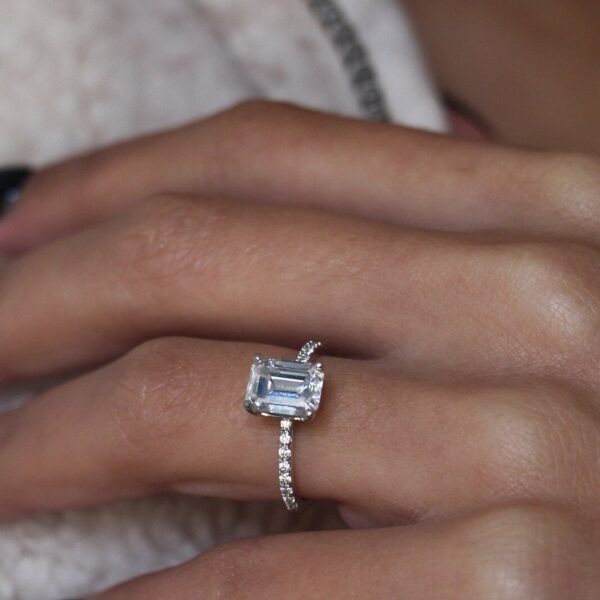
Cushion cut softens every corner into a rounded outline, and it is the shape most associated with vintage and antique inspired settings. Pear combines the point of a marquise with the curve of an oval, and it is almost always worn with the point facing the fingertip. Emerald cut uses long step facets rather than brilliant facets, which trades fire for clarity, so any inclusion in the stone is more visible and any flash of colour is more restrained. Radiant cut keeps the brilliant facet pattern inside a rectangular outline with cropped corners, giving a shape that photographs like emerald but sparkles like round. Heart is the most literal shape in the range, and it needs a setting with a claw directly at the cleft to hold its structure securely.
Metal, and how it changes the stone
The metal underneath a moissanite stone changes how the colour and sparkle read, sometimes more than the shape does.
| Metal |
Effect on the stone |
Best for |
| White gold |
Keeps the stone reading bright and neutral |
Buyers who want maximum contrast and sparkle |
| Platinum |
Same neutral tone as white gold, denser and more durable |
Buyers who want the ring to outlast decades of daily wear |
| Yellow gold |
Warms the stone slightly, softens coloured flashes |
Buyers who want a warmer, more traditional look |
| Rose gold |
The most flattering tone against most skin tones |
Buyers who want a softer, less formal finish |
We work in 9ct and 18ct gold, and platinum on request, and every ring is made to order rather than pulled from finished stock. If you are unsure between 9ct and 18ct, our guide on 9ct versus 18ct gold in South Africa covers the actual durability and cost difference, since the two are often confused.
Why buy moissanite engagement rings from Moissanite by Design
We cut moissanite alongside lab grown diamonds in the same Cape Town workshop, so a buyer comparing the two is not comparing two different suppliers with two different standards. The setting, the claw work, and the finishing on a moissanite engagement ring go through the same hands as a diamond ring at three times the price.
Every centre stone ships with GRA certification, and every design on this page can be built in a different metal, a different carat weight, or a different shape than what is shown, since nothing here is a fixed catalogue item. If a design catches your eye in round but you want it in oval, tell us and we will quote it that way. This is also why our prices show as a range rather than a single figure, since the same setting scales in cost with the stone size you choose.
We do not outsource production to a third party dealer and resell it under our name. That matters for two practical reasons. Repairs and resizing come back to the same workshop that built the ring, so nobody has to explain the design to a stranger, and any custom change you want mid order is a conversation with the person actually making it.
How a made to order ring reaches you
| Step |
What happens |
| Choose your design |
Pick from the range above, or start a custom design if nothing fits exactly |
| Confirm stone and metal |
Shape, carat size, and gold or platinum choice are locked in before we begin |
| We take your finger size |
Using our ring size guide, or a measurement you send us directly |
| We craft the ring |
In our own Cape Town workshop, not pulled from finished stock |
| Insured delivery |
Secure, tracked delivery anywhere in South Africa |
Because every engagement ring is made to order rather than mass produced ahead of time, production takes longer than a stocked item does. Tell us your date when you order and we’ll confirm whether it’s realistic before you pay, rather than after.
Sizing and how long it takes
Every engagement ring in this collection is made to order, which means we start production once we have your finger size rather than shipping from a shelf. If you are ordering as a surprise and do not know the size, tell us that directly. We would rather build the ring correctly on the second try than rush the first one, and resizing after delivery is free.
Use our ring size guide if you are measuring at home. If you need the ring by a fixed date, tell us that when you order and we will confirm whether it is realistic before you pay.
If nothing in the collection matches what you have in mind, our custom design service builds a moissanite engagement ring from a reference image and a budget, with a 3D render for you to approve before any metal is cut. Start that conversation through our request a quote page.
Caring for a moissanite engagement ring
Moissanite does not require special handling beyond what any fine jewellery needs. Warm water, a small amount of dish soap, and a soft brush around the setting once a month keeps the stone clear. Avoid ultrasonic cleaners on any ring with pavé or cluster stones, since repeated vibration can work at the smaller claws over years of use, and avoid abrasive polishes on the metal itself.
At 9.25 on the Mohs scale, moissanite resists scratching from almost everything it touches day to day. It is not immune to impact, so a sharp knock against a hard edge, particularly on a pointed shape like marquise or pear, can chip a point the same way it could on a diamond. Choosing a bezel or a six claw setting on a pointed shape removes most of that risk.
Questions about moissanite engagement rings
Is moissanite a real gemstone?
Yes. Moissanite is silicon carbide, first identified in meteorite fragments in 1893. The stones used in jewellery today are grown in a laboratory rather than mined, the same way lab grown diamonds are.
Does moissanite sparkle more than diamond?
It shows more coloured fire. Moissanite has a refractive index of 2.65 against diamond’s 2.42, so it bends light more sharply and splits more of it into visible colour as it exits the stone.
Is moissanite durable enough for daily wear?
Yes. It ranks 9.25 on the Mohs hardness scale, just below diamond’s 10 and well above sapphire, which makes it highly resistant to scratching in normal daily use.
How much does a moissanite engagement ring cost in South Africa?
Our moissanite engagement rings start at R12,950 for a solitaire and run to R42,850 for larger multi stone designs. Price tracks the setting and carat weight rather than the moissanite itself.
Is moissanite cheaper than a lab grown diamond?
Yes. A 1ct round solitaire in moissanite starts at R13,860, against R19,495 for the same design in an IGI certified lab grown diamond.
Is the moissanite certified?
Yes, every centre stone comes with GRA certification, confirming the carbon and colour grade before the ring ships.
Are these rings solid gold or plated?
Solid. Every ring is 9ct gold, 18ct gold, or platinum, all the way through. We don’t sell plated, filled, or vermeil engagement rings.
Can I see my actual stone before it’s set?
Yes, ask us for a video of the specific stone before it goes into your ring, particularly useful on elongated shapes like oval and marquise.
Can I get a moissanite engagement ring resized?
Yes, and resizing is free. Every moissanite engagement ring is made to order, so tell us if the size needs adjusting after delivery.
What is the difference between a halo and a hidden halo?
A halo surrounds the centre stone in full view and is visible from above. A hidden halo sits underneath the centre stone and is only visible from the side, adding perceived size without changing the ring’s silhouette.
Which shape faces up the largest?
Oval and marquise both face up larger than a round of the same carat weight, since their weight is spread across a longer surface rather than concentrated in depth.
How long does a made to order moissanite engagement ring take?
Production time depends on the design and whether it is custom. Tell us your date when you order and we will confirm whether it is realistic before you pay.
Where is Moissanite by Design based?
We’re based in Cape Town, South Africa, and every ring is made in our own workshop there, not imported finished.
Do you deliver nationwide?
Yes, shipping is free anywhere in South Africa.
Can I design a custom moissanite engagement ring?
Yes. Send a reference image and a budget through our custom design service and we will quote the ring properly, with a 3D render to approve before we craft it.
Keep looking
Moissanite by shape. Round, oval, princess, cushion, pear, emerald, marquise and radiant.
Moissanite by style. Solitaire, halo, hidden halo, trilogy, pavé, bezel and cluster.
Other stones and metals. Lab grown diamond engagement rings, white gold, platinum and rose gold settings.
For the wedding. Women’s wedding rings to pair with your ring, and men’s wedding rings for the other half of the set.
Before you buy. The ring size guide, our guide to choosing an engagement ring, FAQs and contact details.
Or start from the Moissanite by Design homepage.